In a nutshell: The Bitcoin halving is a built-in rule that cuts the number of new bitcoins created per block in half every 210,000 blocks, or roughly every four years. The last halving happened on April 20, 2024, dropping the reward to 3.125 BTC, and the next is expected around April 2028. Halvings reduce new supply, but they don’t guarantee higher prices.
Last updated: September 28, 2026. Dates and block data are as of this update.
Few events in crypto get as much attention as the bitcoin halving. You’ll hear it called a “supply shock,” a “countdown” and sometimes a “guaranteed bull run.” This guide explains what the halving actually is, why it exists, what happened to price after past halvings, and what the next one in 2028 may and may not mean for you.
Table of contents
- What is the bitcoin halving?
- How the halving works
- Bitcoin halving history
- Does the halving affect bitcoin’s price?
- What happened after the 2024 halving
- What the halving means for miners
- When is the next bitcoin halving?
- Bitcoin halving myths vs facts
- What it means for everyday investors
- FAQ
- Sources
What Is the Bitcoin Halving?
Bitcoin has no central bank. Instead, new coins are released on a fixed schedule written into its code. Miners, who use computers to secure the network and add new blocks of transactions, receive newly created bitcoin as a reward for each block. That reward is called the block subsidy.
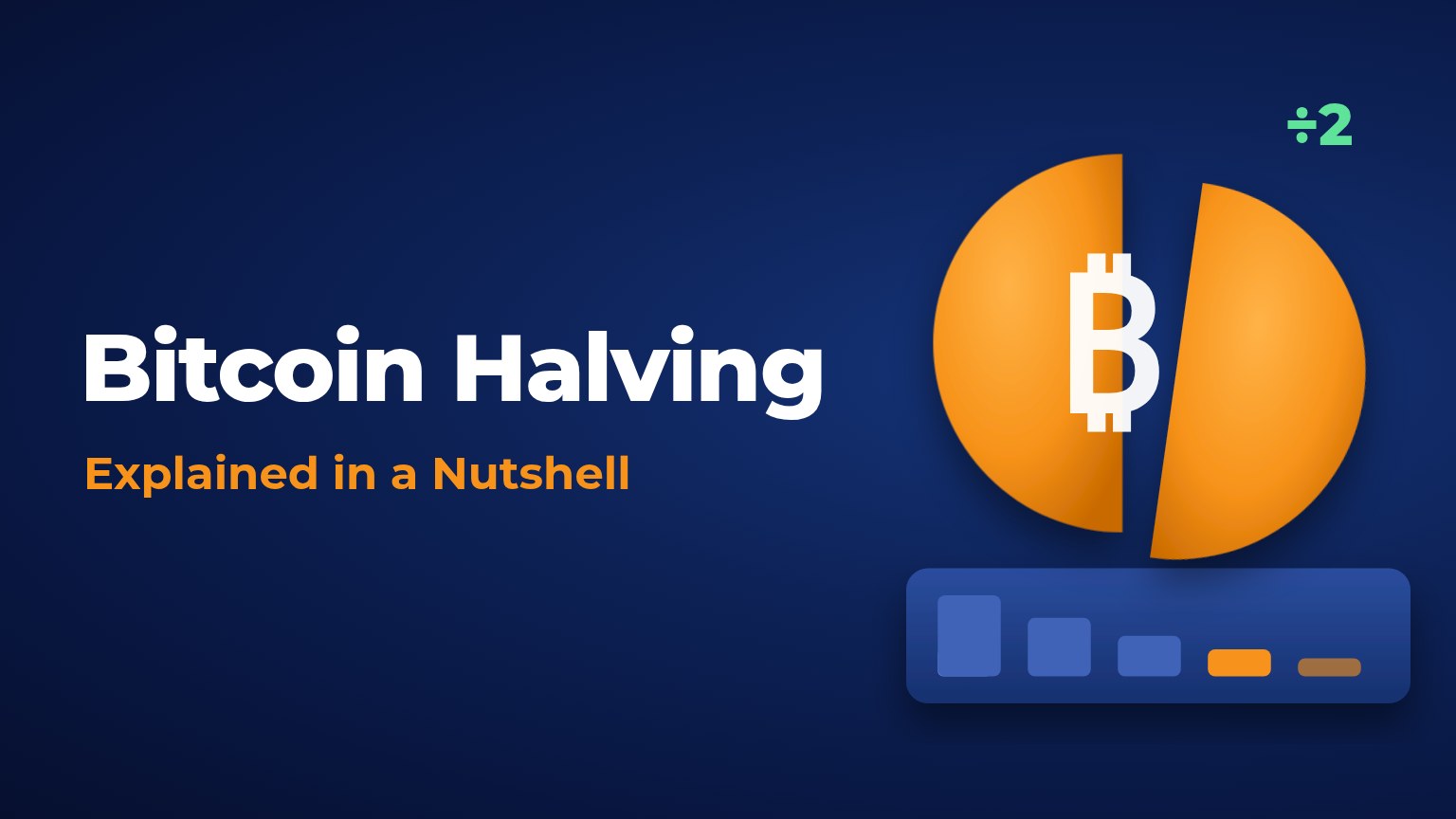
The bitcoin halving is the moment that subsidy is automatically cut in half. It happens every 210,000 blocks. Since a new block is added about every 10 minutes, that works out to roughly every four years.
The halving is a big reason bitcoin’s total supply is capped at 21 million coins. Each cut slows the flow of new bitcoin, so the supply approaches that limit gradually, with the last fractions of a coin expected to be mined around the year 2140.
How the Bitcoin Halving Works
- It’s triggered by block height, not a date. The halving happens at blocks 210,000, 420,000, 630,000 and so on. That’s why future halving dates are always estimates.
- Nobody votes on it. Every node running bitcoin’s software enforces the same rule. Changing it would require broad agreement across the network, which is widely considered extremely unlikely.
- Only the subsidy is halved. Miners also earn transaction fees paid by users. Those fees are not affected by the bitcoin halving.
Bitcoin’s creator, Satoshi Nakamoto, described this schedule in the original design so that coins would be distributed over time rather than all at once.
Bitcoin Halving History
Here is every bitcoin halving so far, plus the next one. Past dates and blocks are from CoinGecko’s halving tracker. The 2028 date is an estimate.
| Halving | Date | Block height | Reward per block |
|---|---|---|---|
| Launch | January 2009 | 0 | 50 BTC |
| 1st | November 28, 2012 | 210,000 | 50 → 25 BTC |
| 2nd | July 9, 2016 | 420,000 | 25 → 12.5 BTC |
| 3rd | May 11, 2020 | 630,000 | 12.5 → 6.25 BTC |
| 4th | April 20, 2024 | 840,000 | 6.25 → 3.125 BTC |
| 5th (expected) | ~April 2028 | 1,050,000 | 3.125 → 1.5625 BTC |
Based on the block schedule, roughly 20.09 million bitcoin had been mined by late September 2026, leaving fewer than 1 million still to be created over the next century or so.
Does the Bitcoin Halving Affect Price?
This is the question everyone asks. The honest answer: maybe, but not in a simple or guaranteed way.
The supply argument
After a halving, fewer new coins hit the market each day. Miners often sell part of their rewards to pay for electricity and equipment, so a smaller reward can mean less regular selling. If demand stays the same or rises while new supply shrinks, basic economics suggests upward pressure on price.
The past pattern
Historically, bitcoin reached new all-time highs within roughly 12 to 18 months after each of the first three halvings. That track record is why the halving is so often linked to bull markets.
Why you should be careful with that pattern
- Tiny sample size. Four halvings is not enough data to prove cause and effect.
- It’s no surprise. The halving schedule is public years in advance, so markets can price it in early.
- Other forces matter more now. Interest rates, ETF flows, regulation and overall risk appetite can outweigh the halving.
- Shrinking impact. Each halving removes a smaller share of total supply than the one before, so the supply shock gets smaller over time.
What Happened After the 2024 Halving
The fourth bitcoin halving took place on April 20, 2024. Unusually, bitcoin had already set a new all-time high in March 2024, before the halving, which had not happened in earlier cycles. A few months earlier, in January 2024, US spot Bitcoin ETFs launched, bringing a new source of demand. (See our guide to how Bitcoin ETFs work.)
Bitcoin went on to set a record high of about $126,000 in early October 2025, according to The Block. It then fell sharply, dropping below $58,000 in June 2026 according to Bitcoin.com’s market data, before recovering to the mid-$80,000s in late September 2026. For a current snapshot, see our crypto market this week recap.
The takeaway: the post-halving period did include a new all-time high, but also a drawdown of more than 50% from the peak. A halving doesn’t smooth out bitcoin’s volatility.
What the Bitcoin Halving Means for Miners
For miners, a halving is an overnight 50% pay cut on the subsidy portion of their income. Their costs, mainly electricity and hardware, don’t drop at the same time.
- Less efficient miners may shut down machines or sell out to larger operators.
- Transaction fees become a more important share of miner revenue over time.
- The network automatically adjusts mining difficulty about every two weeks, so blocks keep arriving around every 10 minutes even if some miners leave.
In the long run, once the subsidy becomes tiny, bitcoin’s security will depend mostly on transaction fees. How well that works is an open debate among researchers.
When Is the Next Bitcoin Halving?
The next bitcoin halving will happen at block 1,050,000, cutting the reward from 3.125 BTC to 1.5625 BTC. As of late September 2026, trackers such as CoinGecko and CoinWarz estimate it will arrive in mid-April 2028. The exact day will shift slightly as block times vary.
Bitcoin Halving Myths vs Facts
| Myth | Fact |
|---|---|
| “The halving cuts my bitcoin in half.” | No. Only the reward for new blocks is halved. The coins you already own are untouched. |
| “Price always doubles after a halving.” | Past cycles saw big gains, but there’s no rule guaranteeing it, and deep drops have happened too. |
| “Transactions stop or slow during the halving.” | Blocks keep being produced as normal. The change is a single rule switch at one block. |
| “The halving date is fixed.” | It’s tied to a block number, so the calendar date is always an estimate until it happens. |
| “Miners will abandon bitcoin.” | Some less efficient miners may shut down, but difficulty adjustments keep the network running. |
What the Bitcoin Halving Means for Everyday Investors
- Don’t treat it as a buy signal on its own. Past patterns are not promises.
- Think in years, not weeks. Halving effects, if any, have played out over long periods with big swings in between.
- Size your position carefully. Only invest what you could afford to see fall by half or more.
- Remember taxes. Selling bitcoin at a gain is taxable in many countries. US readers can start with our guide to crypto taxes.
Curious how bitcoin compares with other networks? Read what is Ethereum or our Solana vs Ethereum comparison.
Frequently Asked Questions
What happens during a bitcoin halving?
When the network reaches the target block, the reward miners receive for each new block is automatically cut in half. Nothing changes for people who simply hold bitcoin. Your coins stay the same.
How often does the bitcoin halving happen?
Every 210,000 blocks, which has worked out to roughly every four years.
When was the last bitcoin halving?
April 20, 2024, at block 840,000. The reward dropped from 6.25 BTC to 3.125 BTC.
Will bitcoin’s price go up after the 2028 halving?
No one knows. Previous halvings were followed by new highs, but the sample is small and many other factors drive price. Treat any confident prediction with caution.
What happens when all 21 million bitcoin are mined?
Miners will stop receiving new coins and will rely entirely on transaction fees. Based on the current schedule, this is expected around the year 2140.
Sources
- CoinGecko: Bitcoin halving countdown and history (accessed Sept. 28, 2026)
- CoinWarz: Bitcoin halving countdown (accessed Sept. 28, 2026)
- Satoshi Nakamoto: Bitcoin: A Peer-to-Peer Electronic Cash System (2008)
- The Block: Bitcoin ETFs turn positive for 2026 (Sept. 26, 2026)
- Bitcoin.com News: Bitcoin price market update (Sept. 27, 2026)
Disclaimer: This article is for educational purposes only and is not financial or investment advice. Bitcoin is highly volatile and past performance does not predict future results. Do your own research and consider speaking with a licensed financial professional before investing.