In a nutshell: A paper wallet in crypto is a piece of paper with a public address and its private key printed or written on it, so the coins can be stored offline. It was a popular cold storage method in Bitcoin’s early years, but today many security experts, including the Bitcoin Wiki, call it outdated and risky, and suggest hardware wallets and seed phrase backups instead. Educational only; not financial advice.
Last updated: October 5, 2026.
If you found an old paper wallet in a drawer, or someone suggested you “print a wallet” to keep crypto safe, this guide is for you. It covers how a paper wallet works, why it has fallen out of favor, how to safely move funds off an old one, and what most people use instead. For the basics first, see our crypto wallet guide.
Table of contents

What Is a Paper Wallet in Crypto?
A paper wallet is a physical copy of the keys that control crypto on a blockchain. Despite the name, it holds no coins. The coins always live on the blockchain. The paper just stores the secret that lets someone spend them.
A typical paper wallet shows two things, often as text and QR codes:
- Public address: the “account number” you share so people can send you crypto. Anyone can see it.
- Private key: the secret that signs transactions. Whoever has it controls the funds. Never share it.
Some people also call a written-down seed phrase (the 12 or 24 recovery words from a modern wallet) a “paper wallet.” That is really a paper backup of a wallet, not a classic paper wallet, and it works differently, as we explain below.
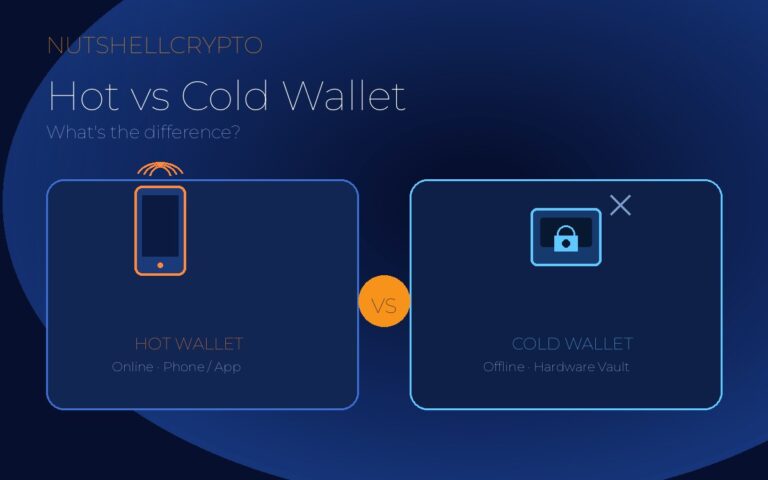
Paper wallets are a form of cold storage: the key sits offline, out of reach of remote hackers. If you are new to that idea, our hot wallet vs cold wallet guide explains the difference.
How a Paper Wallet Works
The basic flow looked like this:
- Generate a key pair. A program creates a random private key and works out the matching public address.
- Print or write it down. Both are put on paper, usually with QR codes for easy scanning.
- Fund it. You send crypto to the public address. The paper itself never touches the internet.
- Store it. The paper goes into a safe, a lockbox, or another secure place.
- Spend it. To use the funds, you load the private key into wallet software and move the coins out.
Because you can check the public address on a block explorer at any time, you could watch the balance without ever exposing the private key. That was the main appeal.
How People Made Paper Wallets
According to the Bitcoin Wiki, paper wallets were popular from about 2011 to 2016. Most were made with websites that generated a key in the browser.
The best-known example is bitaddress.org, an open-source “JavaScript client-side Bitcoin wallet generator.” Careful users would:
- Download the page’s source code and verify it.
- Disconnect from the internet, or boot a clean offline computer.
- Generate the key, print it, then wipe or shut down the machine.
Some Bitcoin ATMs also printed paper-wallet-style receipts with a private key for customers who had no wallet. The Bitcoin Wiki says the customer should sweep those coins into their own wallet as soon as possible.
Why Paper Wallets Are Now Considered Risky
The Bitcoin Wiki describes paper wallets as “an obsolete and unsafe method of storing bitcoin” and says they “should not be used.” Here are the main reasons.
1. Partial spends and the change address trap
This is the classic mistake. On Bitcoin, when you spend part of the coins at an address, the rest goes to a change address chosen by your wallet software. The Bitcoin Wiki notes that users have imported a paper wallet’s key, spent part of the balance, and wrongly believed the rest was still on the paper. In reality, the leftover sat in a change address controlled by the software wallet. If that software wallet was lost, so was the money.
2. Printers and computers can leak the key
The Bitcoin Wiki points out that many printers have internal storage, and shared office or school printers are often logged. Wi-Fi printing can expose data too. On the computer side, malware can copy a key the moment it is generated or typed. Even an “offline” setup is only as safe as the device you used.
3. Fake or compromised generator sites
Because most paper wallets came from websites, they inherited the risks of browser-based wallets. The Bitcoin Wiki links to community reports of malicious or compromised paper wallet generator sites. A generator that secretly saves your key can drain the wallet later.
4. Physical damage and reading errors
Paper burns, fades, and gets wet. The Bitcoin Wiki notes QR codes have been made unreadable by water, crumpling, and even folding. Private keys are long strings in small type, so a “B” can look like an “8.” One wrong character makes the key invalid. Seed phrases are more forgiving because they use real words from a fixed list.
5. Address reuse and privacy
A paper wallet has one address. Reusing it for every deposit makes your full history easy to link. Checking the balance usually means using a third-party block explorer, which can see which address you care about.
6. Sweeping vs importing confusion
There are two ways to use a paper wallet’s key, and mixing them up causes losses:
- Sweeping creates a transaction that sends the entire balance from the paper wallet to a new address in your current wallet. Afterward, the paper is empty.
- Importing adds the private key to your wallet software, but the key is still a separate, standalone key. It is not covered by your wallet’s seed phrase.
The Bitcoin Wiki describes people who imported a key, assumed their seed backup now covered it, and destroyed the paper. If the app was later removed, the funds were gone. That is why sweeping is the safer choice.
How to Safely Redeem an Old Paper Wallet
If you have an old paper wallet with funds on it, the Bitcoin Wiki recommends using the sweep feature of a reputable wallet. A careful approach:
- Check the balance first. Look up the public address on a block explorer. Never type the private key into a website.
- Set up a new, secure wallet. Ideally a hardware wallet or well-known, open-source software wallet, with its recovery phrase backed up.
- Use the sweep function. Wallets such as Electrum document a sweep option for private keys. Scan or type the key on a device you trust.
- Move the whole balance at once. Sweeping pays a normal network fee and empties the address in a single transaction. Avoid partial spends.
- Confirm, then retire the paper. Once the transaction confirms and the funds show in your new wallet, treat the old key as used. Do not send anything to that address again.
Watch for scams. No real support team or “recovery service” needs your private key. The FTC’s crypto scam guidance is worth reading before you contact anyone for help.
Safer Alternatives to Paper Wallets
Bitcoin.org’s security guide points to backups, offline wallets for savings, hardware wallets, and multi-signature as ways to protect funds. In practice, most people now use one of these:
Hardware wallets
A hardware wallet is a small device that keeps private keys off your computer and signs transactions inside the device. Ledger Academy notes that, compared with a paper wallet, hardware wallets are more user-friendly and use a hierarchical deterministic (HD) structure, so one backup can restore many accounts and fresh addresses. Buy only from the maker or an authorized seller.
Seed phrase backups on paper or metal
Modern wallets give you a 12- or 24-word seed phrase. The Bitcoin Wiki says writing these words down is a better way to do what paper wallets tried to do. You handwrite them (no printer), and they can restore every address the wallet creates, including change addresses. For long-term savings, many people stamp or engrave the words on a metal backup plate to resist fire and water.
Multisig
Multi-signature (multisig) setups need more than one key to move funds, for example 2 of 3. Losing one key, or having one stolen, does not mean losing everything. It adds complexity, so it suits larger amounts and people willing to learn the setup.
Regulated custody or ETFs
If managing keys feels like too much, some investors in the US and Canada prefer a regulated exchange or a spot Bitcoin ETF in a brokerage account. You give up direct control of keys in exchange for convenience. See how to buy Bitcoin and our Bitcoin ETF vs buying Bitcoin comparison.
| Option | Offline keys | Handles change addresses | Main risk |
|---|---|---|---|
| Paper wallet | Yes | No | Damage, leaks, spend mistakes |
| Hardware wallet | Yes | Yes | Losing device and backup; fake devices |
| Seed on metal | Yes (backup) | Yes | Theft of the backup |
| Multisig | Yes | Yes | Setup complexity |
| Exchange or ETF | No (custodian holds) | N/A | Third-party risk |
FAQ
Is a paper wallet safe today?
It can protect against online hacking, but the Bitcoin Wiki calls paper wallets obsolete and unsafe because of printing leaks, physical damage, and spend mistakes. Most people are better served by a hardware wallet with a seed phrase backup.
Can a paper wallet be hacked?
The paper itself cannot be hacked online, but the key can leak when it is created, printed, photographed, or typed into an infected device. Anyone who sees the private key can take the funds.
Do paper wallets expire?
No. The coins stay on the blockchain at that address. The risk is the paper fading or getting damaged, or wallet software no longer supporting an older key format.
Should I import or sweep a paper wallet?
Sweep. Sweeping moves the full balance to your current wallet, which is covered by its seed phrase. Importing keeps a standalone key that your seed backup does not protect.
Is writing down my seed phrase the same as a paper wallet?
Not quite. A seed phrase backs up a whole HD wallet with many addresses. A classic paper wallet holds a single private key and address.
Sources
- Bitcoin Wiki: Paper wallet
- Bitcoin Wiki: Private key
- Bitcoin.org: Securing your wallet
- GitHub: bitaddress.org source code
- Electrum documentation: FAQ
- Ledger Academy: What is a crypto wallet?
- Investopedia: Paper wallet
- FTC: What to know about cryptocurrency and scams
Educational content only. This is not financial or investment advice. Crypto is volatile and you can lose money. Do your own research before you act.