In a nutshell: A crypto signal is a suggestion to buy or sell a coin at a certain price, usually with a target and a stop-loss. Signals can come from your own chart rules, from software, or from a person or group that shares them on Telegram, WhatsApp or Discord. A signal is only someone’s guess, not a sure thing. US and Canadian regulators warn that many paid “signal groups” are scams or pump-and-dump schemes. Educational only; not financial advice.
Last updated: October 23, 2026.
Search for crypto signals and you will find thousands of channels promising “VIP calls,” “95% win rates” and coins that will “go to the moon.” Some are run by honest hobby traders. Many are not.
This guide explains what a trading signal actually is, what one looks like, where signals come from, what they cost you, and the red flags that the CFTC, FINRA and the Canadian Securities Administrators tell people to watch for.
Table of contents
What Is a Crypto Signal?
A trading signal is a trigger to buy or sell an asset. Investopedia defines a trade signal as a buy or sell trigger produced by analysis such as technical indicators or computer algorithms, with the goal of giving traders a rule-based, less emotional way to act.
In crypto, the word “signals” is used in two different ways:
- A rule you set yourself. For example: “If Bitcoin closes above its 200-day moving average, I will look at buying.” The signal is just the moment your rule is met.
- A tip someone sends you. A person, website or chat group posts “Buy coin X now at this price.” This is what most people mean by “crypto signals,” and it is where most of the risk sits.
Either way, a signal is a prediction. It does not know what the market will do next, and a signal that worked last week can fail badly this week.
What a Signal Message Looks Like
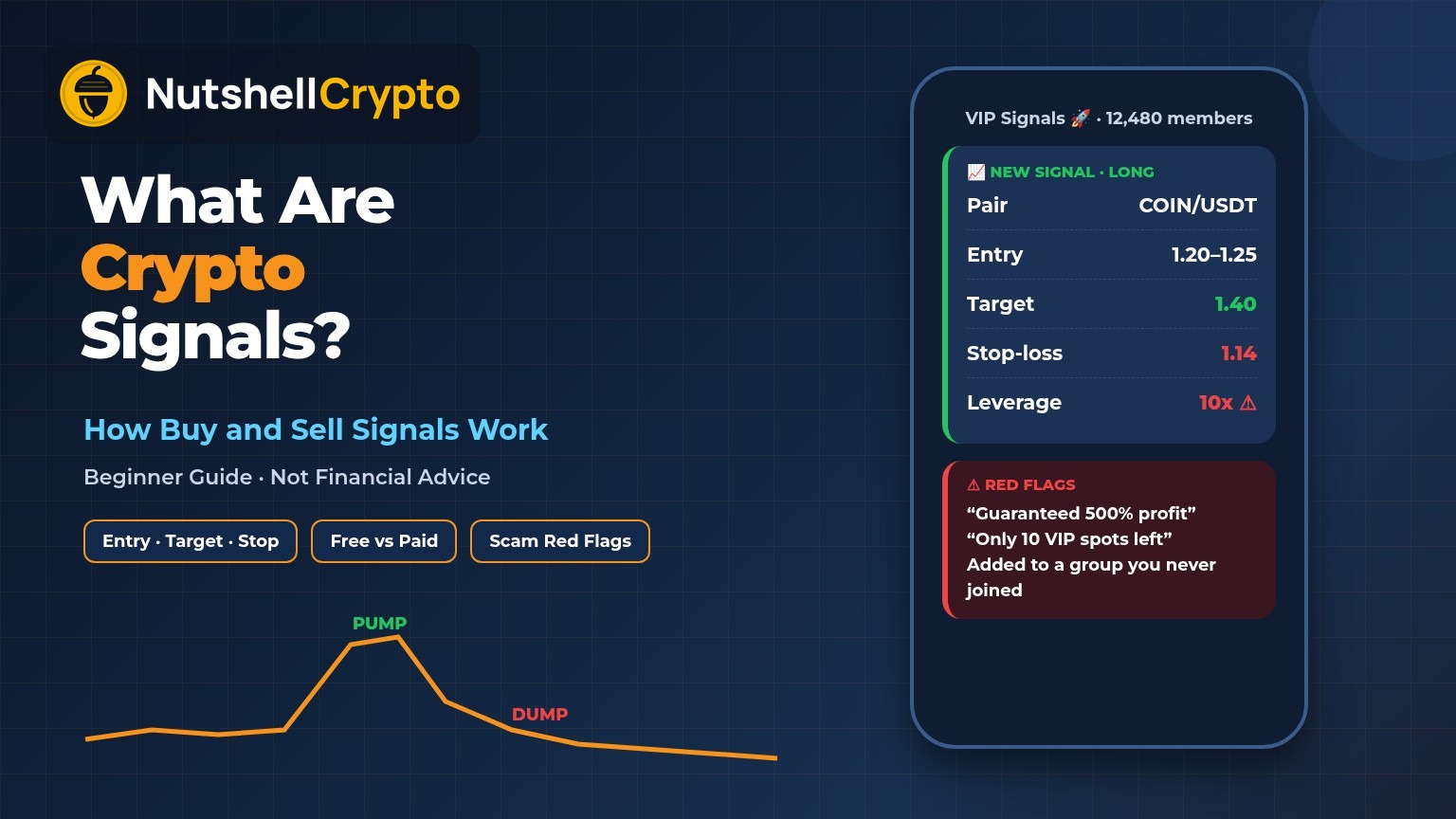
Most signal posts follow the same format. Here is an illustrative example (not a real trade):
COIN/USDT, LONG
Entry: 1.20 to 1.25
Target 1: 1.32 | Target 2: 1.40
Stop-loss: 1.14
Leverage: 10x
- Pair: which coin, priced in which currency (often the USDT stablecoin).
- Long or short: long means betting the price goes up; short means betting it goes down.
- Entry: the price range to buy (or sell short) in.
- Targets: prices where the sender suggests taking profit.
- Stop-loss: the price where you exit to limit the loss. A stop-loss order becomes a market order once that price is hit, so in a fast market you can be filled at a worse price than the one you set.
- Leverage: borrowed money that makes gains and losses bigger. Many signal groups push leverage; that is the fastest route to a wiped-out position, as our guide to how liquidation works in crypto explains.
A signal without a stop-loss, or one that tells you to use high leverage, is a warning sign on its own.
Where Crypto Signals Come From
Your own chart rules
Many traders build simple signals from price, volume and indicators such as moving averages or RSI. If you want to start here, learn the basics in our guide on how to read a crypto trading chart first. The upside of your own rules: you know exactly why the signal fired, and nobody is selling you anything.
Alerts and software
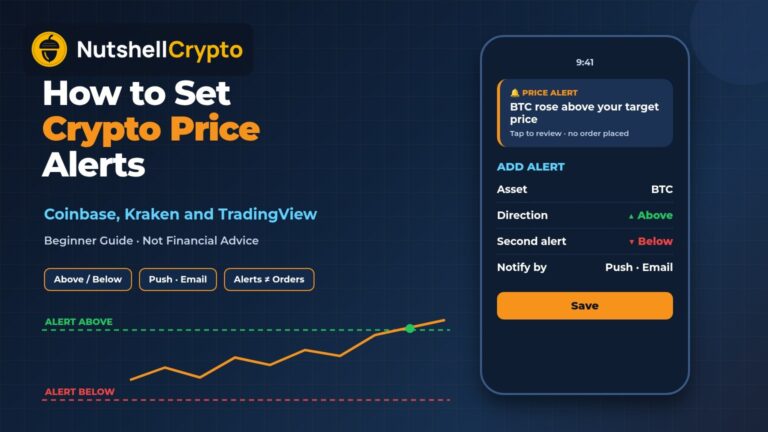
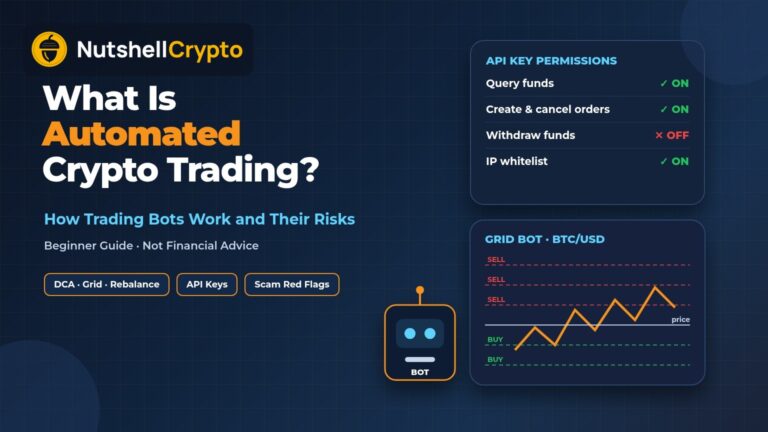
Charting tools and exchanges can notify you when a price or indicator condition is met. Setting crypto price alerts is the simplest version: you get a message, and you decide what to do. Some people go further and let a bot act on signals automatically; that adds new risks, covered in our explainer on automated crypto trading and trading bots.
Other people
This is the “signal group” world: Telegram and Discord channels, WhatsApp groups, X accounts and paid websites. The quality ranges from thoughtful analysis to outright fraud, and from the outside it is very hard to tell which is which.
Free vs Paid Signal Groups
Free channels often exist to sell something: a paid “VIP” tier, an exchange referral link (the channel owner earns a share of your trading fees), or a course. Paid groups charge monthly or lifetime fees, sometimes in crypto.
Paying does not make a signal more reliable. Before you pay anyone, ask:
- Can the track record be checked? Screenshots of winning trades are easy to fake or cherry-pick. A record you cannot verify is not a record.
- How does the sender make money? Subscription fees, referral commissions and coins they already own all create a reason to post signals whether or not they are good.
- Who is behind it? In the US, the CFTC says to trade futures only with registered firms and individuals and offers a lookup at cftc.gov/check. In Canada, anyone offering investments must be registered with a provincial or territorial regulator.
Why Following Signals Is Harder Than It Looks
Even an honest signal is hard to copy profitably:
- You are late. By the time a message reaches thousands of members and you open your app, the price may already be past the entry range.
- Costs add up. Trading fees, the spread between buy and sell prices, and slippage eat into small targets. See our breakdown of crypto exchange fees.
- Win rates hide losses. A group can be “right” 8 times out of 10 with small gains and still lose money overall if the other 2 trades are large losses.
- Emotions return. Signals are sold as emotion-free, but chasing calls, skipping stop-losses and “revenge trading” after a loss are very human mistakes.
The CFTC’s general guide to the risks of virtual currency trading lists volatile price swings, flash crashes and market manipulation among the main risks, and its advice is to only speculate with money you can afford to lose.
Pump-and-Dump “Signals”
Some signal groups are not trying to predict the market at all; they are trying to move it. In its pump-and-dump customer advisory, the CFTC describes groups with thousands of members where the organizer counts down a “buy signal,” then names a thinly traded coin and the exchange to buy it on. In the CFTC’s example, the buy-and-sell cycle was over in less than eight minutes, and the people pulling the strings typically get out first while everyone else scrambles to sell.
A similar pattern now shows up in so-called “investment groups.” FINRA reports a spike in complaints about social media investment group scams since fall 2023, including groups that push lesser-known crypto assets. In Canada, the Canadian Securities Administrators issued an April 2026 investor alert on “ramp-and-dump” scams, warning that these schemes are organized through WhatsApp, Discord and Telegram.
The CFTC also notes that market manipulation is against the law, so joining a “pump” is not just risky; it can be illegal.
Red Flags Regulators Warn About
Put together, the warnings from the FTC’s guide to crypto scams, the CFTC, FINRA and the CSA point to the same warning signs:
- Guaranteed or huge returns. The FTC says only scammers guarantee profits or big returns. The CFTC warns about messages promising 100, 500 or 1,000 percent profits.
- You were added to a group you never joined. The CFTC’s messaging app advisory says scammers add random phone numbers to WhatsApp and Telegram groups. Its advice: do not reply, delete the messages, block the senders and tighten your privacy settings.
- “Daily trading signals” plus glowing screenshots. FINRA’s imposter scam warning says fake groups offer “daily trading signals” with unrealistic returns, and that members sharing profit screenshots may be accomplices.
- Small wins first, then a big ask. FINRA describes schemes that start with better-known assets to build trust before pushing an obscure one. It also says to disengage if someone asks you for a screenshot of your account showing a trade.
- A new platform you have never heard of. The FTC describes fake “investment” websites that show gains but never let you withdraw, or only after you pay high fees.
- Pressure and urgency. “Last chance,” countdowns and “only 10 VIP spots left” exist to stop you from thinking.
A Safer Way to Use Signals
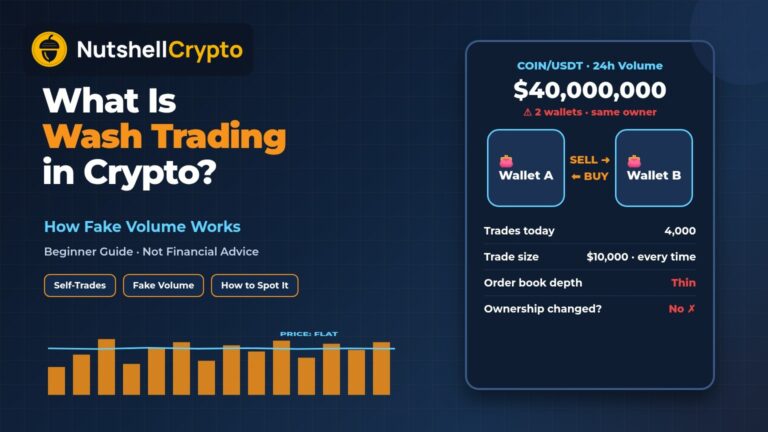
- Treat any signal as an idea, not an instruction. Check the coin, its trading volume (which can be inflated by crypto wash trading) and the reason for the trade yourself.
- Prefer your own simple rules. A written plan plus price alerts gives you most of the benefit without paying a stranger.
- Skip leverage while learning. If you trade at all, start with small spot trades. Our guide to spot trading in crypto covers how they work.
- Always use a stop-loss, and size positions small. Decide in advance how much you are willing to lose on one trade.
- Never share keys or seed phrases. No real signal service needs your login, your exchange API withdrawal rights or your wallet recovery words.
- Keep records. In the US and Canada, crypto trades can be taxable events; see our crypto taxes guide.
How to Report a Signal Scam
In the US, the FTC lists these places to report crypto fraud: ReportFraud.ftc.gov, the CFTC at CFTC.gov/complaint, the SEC at sec.gov/tcr, the FBI’s Internet Crime Complaint Center at ic3.gov, and the exchange you used to send the money. In Canada, contact your provincial or territorial securities regulator; the CSA alert above lists how to check whether a person or firm is registered.
FAQ
Are crypto signals legal?
Sharing a trading opinion is generally legal. Running a pump-and-dump, faking results, or giving regulated investment advice without registration can break the law. The CFTC says market manipulation is illegal.
Do crypto signals actually work?
Some signals win and some lose; no one can reliably predict short-term crypto prices. A long, verifiable record after fees is rare, and screenshots alone prove nothing.
Are free crypto signals on Telegram safe?
Many free channels are marketing for paid tiers or exchange referral links, and some are pump-and-dump groups. US and Canadian regulators specifically warn about investment groups on Telegram, WhatsApp and Discord.
What is a buy signal in crypto?
A buy signal is a condition that suggests buying, such as a price breaking above a level or an indicator crossing a line. It is a suggestion based on past patterns, not a guarantee.
Can a bot follow crypto signals for me?
Yes, some bots and copy-trading tools can place trades from signals automatically. That removes the delay but also removes your chance to say no to a bad trade, so the risks of the signal source matter even more.
This article is for education only and is not financial or investment advice. Crypto is highly volatile, and you can lose some or all of what you invest. Leveraged trading can lose money very quickly.
Sources
- Investopedia: Trade Signal
- Investopedia: Stop-Loss Order
- CFTC: Beware Virtual Currency Pump-and-Dump Schemes
- CFTC: Use Caution Responding to Messaging Apps
- CFTC: Warns of Potential Dangers for Messaging App Users
- CFTC: Understand the Risks of Virtual Currency Trading
- FTC: What To Know About Cryptocurrency and Scams
- FINRA: Social Media “Investment Group” Imposter Scams Continue to Rise
- FINRA: Be Alert to Signs of Imposter Investment Scams
- Ontario Securities Commission / CSA: Ramp-and-dump scams surge (April 16, 2026)