In a nutshell: A custodial wallet is a crypto account where a company, usually an exchange like Coinbase or Kraken, holds the private keys for you. You log in with an email and password, and the company moves your crypto when you ask; with a non-custodial wallet, you hold the keys and the recovery phrase yourself. Educational only; not financial advice.
Last updated: October 7, 2026.
If you bought your first bitcoin on an exchange app, you almost certainly have a custodial wallet. Here is how custodial wallets work, how they compare with non-custodial crypto wallets, and what the FTX and Celsius collapses taught users. New to wallets in general? Start with our beginner’s guide to crypto wallets.
Table of contents
What Is a Custodial Wallet?
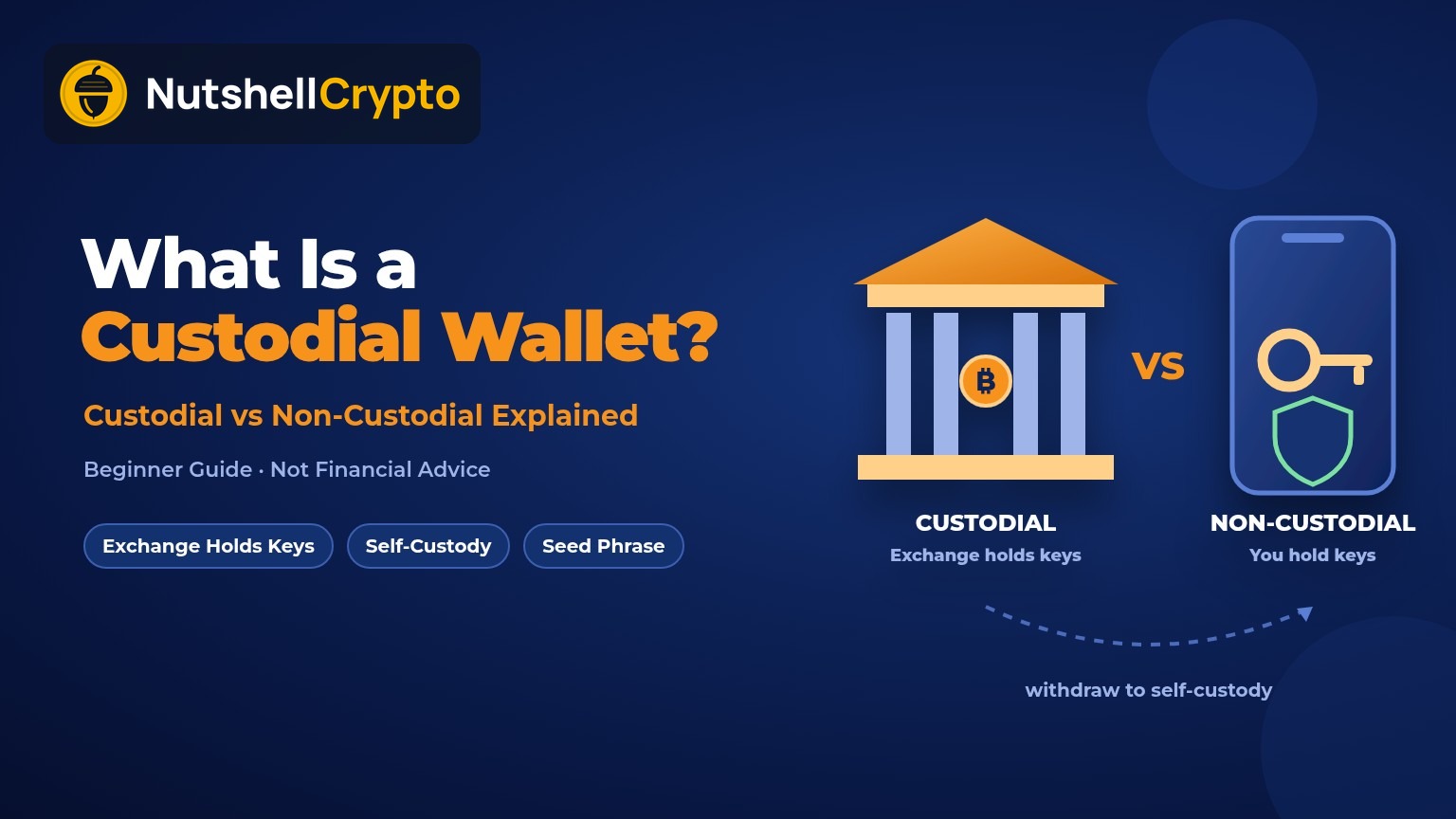
A custodial wallet is a crypto wallet where a third party, the custodian, controls the private keys. The custodian is usually a crypto exchange or a dedicated custody firm. You see a balance in an app, but the company holds the keys that can actually move the coins on the blockchain.
The SEC’s investor bulletin on crypto asset custody calls this “third-party custody.” It explains that third-party custodians include crypto exchanges and dedicated crypto asset custody providers, and that they manage and control access to your private keys. The bulletin also makes a point many beginners miss: crypto wallets do not store the crypto itself. They store the private keys, the passcodes that let someone authorize transactions.
Coinbase’s help center uses the same language. It says an exchange, “also called a custodial wallet,” is a platform that holds your crypto on your behalf, and it lists Coinbase, Binance, Kraken, OKX and Bybit among its examples. These platforms are centralized exchanges (CEXs): companies that run the order book and hold customer coins.
How a Custodial Wallet Works
Using a custodial crypto wallet feels like using a banking or brokerage app:
- You sign up with an email and password and usually complete identity verification (KYC), according to Coinbase’s help center.
- The platform manages the private keys. When you hit “send,” the company signs and broadcasts the transaction for you.
- Your balance is tracked on the company’s books. Coinbase says it keeps internal ledgers that track account activity in real time.
- Storage is a mix of hot and cold. The SEC bulletin notes that custodians may hold keys in cold wallets, hot wallets, or a combination. Coinbase says it keeps “a vast majority” of assets offline in cold storage. (Our hot wallet vs cold wallet guide explains the difference.)
The big practical difference is recovery. Coinbase notes that if you forget your password, you can recover access to an exchange account. With a self-custody wallet, the recovery phrase is the only way back in.
Custodial vs Non-Custodial Wallet
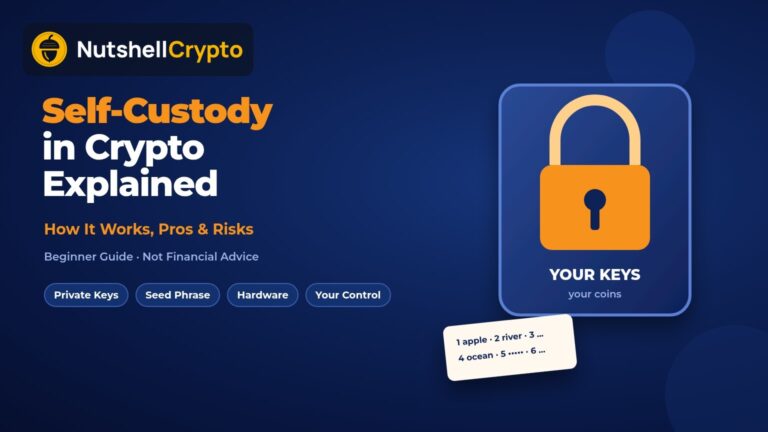
A non-custodial crypto wallet (also called self-custody or self-hosted) puts the private keys on your own device or hardware. Coinbase says these wallets give you a recovery phrase, typically 12 or 24 words, during setup, and that if you lose it, no one can help you recover access. Examples Coinbase lists include MetaMask, Phantom, Exodus and Trust Wallet, plus hardware devices like Ledger and Trezor.
| Custodial wallet | Non-custodial wallet | |
|---|---|---|
| Who holds the private keys | The exchange or custodian | You |
| How you log in | Email, password, 2FA | App password plus a recovery phrase you store |
| Forgot your login? | Reset it with the company | Restore with your seed phrase, or the funds may be lost |
| Main risk | Company hack, freeze or bankruptcy | Your own mistakes, phishing, lost backups |
| Best fit | Buying, selling, small balances, beginners | Long-term holding, DeFi, full control |
Coinbase gives a simple test for telling custodial and non-custodial wallets apart: if you can get back in by contacting the platform or resetting your credentials, it’s custodial. If you received a recovery phrase during setup and control your own keys, it’s self-custody.
Neither is automatically safer. The SEC bulletin is direct on both sides: with self-custody, if your wallet is lost, stolen, damaged or hacked, you may permanently lose access; with third-party custody, if the custodian is hacked, shuts down or goes bankrupt, you may lose access too.
Is Coinbase a Custodial Wallet?
Yes, a regular Coinbase.com account is custodial. Coinbase’s page on what it does with your digital assets says it maintains the private keys to the hosted wallet assigned to you. It also says the assets “never belong to Coinbase,” that it holds customer assets 1:1, and that it does not lend your assets unless you instruct it to.
Coinbase’s self-custody app is a different product. Coinbase’s Learn article on Coinbase vs Coinbase Wallet says that with the wallet app you secure your own recovery phrase, Coinbase never has access to it, and so it cannot help you recover lost keys. Coinbase’s help center now lists its Base app among self-custody wallets. If you search for a “Coinbase custodial wallet,” the answer is your normal Coinbase account; the separate wallet app is non-custodial.
Pros of Custodial Wallets
- Easy to start. No seed phrase to write down; you log in like any other app.
- Password recovery. Lost logins can usually be reset through support.
- Buy, sell and cash out in one place. Most exchanges link to a bank account. Our how to buy bitcoin guide walks through that flow.
- Professional security. Large custodians use cold storage and advanced key-signing methods; Coinbase says it uses multi-party computation (MPC), which splits signing keys into shares.
Risks of Custodial Wallets
The company can fail
This is the risk behind the phrase “not your keys, not your coins.” In November 2022, crypto exchange FTX filed for U.S. bankruptcy protection after a liquidity crisis, along with its trading firm Alameda Research and about 130 affiliated companies, Reuters reported. Founder Sam Bankman-Fried resigned as CEO.
Crypto lender Celsius Network filed for bankruptcy in July 2022. In January 2023, U.S. Bankruptcy Judge Martin Glenn ruled that Celsius owned most of the crypto customers had deposited into its interest-bearing Earn accounts, because its terms of use transferred ownership. Reuters reported the ruling affected about 600,000 accounts holding assets valued at $4.2 billion, and that Earn customers would be treated as unsecured creditors.
The lesson: read the terms. Whether a platform holds your coins for you or owns them can decide what you get back if it collapses.
Your crypto is not FDIC insured
The FDIC’s fact sheet on crypto companies says deposit insurance does not apply to crypto assets and does not protect against the default, insolvency or bankruptcy of non-bank entities, including crypto custodians, exchanges, brokers and wallet providers.
Lending and commingling
The SEC warns that some custodians use deposited crypto as collateral for their own purposes, such as lending, sometimes called “rehypothecation,” and some commingle customer assets instead of holding them individually. It recommends finding out whether your custodian does either and whether it needs your consent.
Hacks, freezes and account takeovers
A platform hack can pause withdrawals for everyone, as in our coverage of Bitget’s withdrawal restart after a hack. And because a custodial account is protected by a login, phishing and stolen passwords are a real threat. Turn on strong two-factor authentication and ignore “support” agents who contact you first. The FTC notes that crypto payments typically can’t be reversed.
Custodial Wallets in Canada
Canadian regulators tightened custody expectations after the 2022 failures. In CSA Staff Notice 21-332 (February 22, 2023), the Canadian Securities Administrators pointed to the insolvencies of Voyager, Celsius, FTX, BlockFi and Genesis. The notice says crypto trading platforms commit to hold at least 80% of the total value of client crypto with third-party custodians, and to keep Canadian clients’ assets separate from their own property and in trust for clients.
Before using a platform in Canada, check the CSA’s list of crypto platforms authorized to do business with Canadians. The notice specifically flags the risk of trading through unregistered platforms based outside Canada.
Questions to Ask Before You Trust a Custodian
The SEC bulletin suggests researching any custodian first. Its key questions, condensed:
- How is the custodian regulated, and are there public complaints about it?
- Does it insure against loss or theft, and on what terms?
- Where and how are the keys stored: hot wallets, cold wallets, or a subcontractor?
- Does it lend out or commingle customer crypto, and does it need your consent?
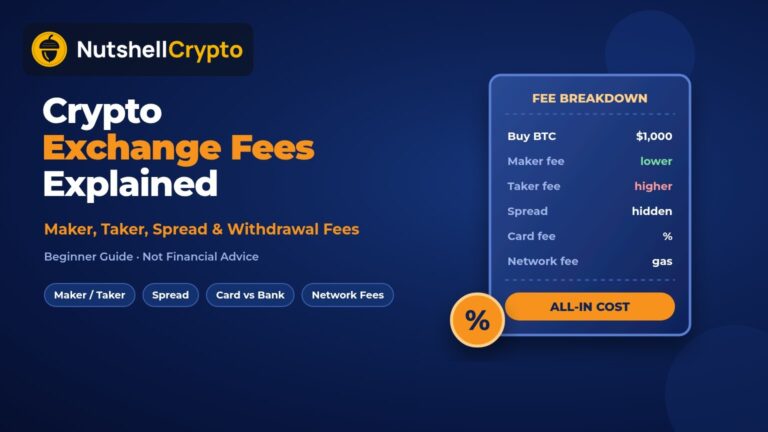
- What are the fees for trading, withdrawing and closing the account?
- How does it protect and use your personal data?
How to Move From a Custodial to a Non-Custodial Wallet
Many people use both: an exchange to buy, and a self-custody wallet to hold. To move coins off an exchange:
- Set up a non-custodial wallet from the official website or app store, and write the recovery phrase on paper. Our DeFi wallet guide walks through the setup.
- Copy your receiving address and check the network matches what the exchange will send on.
- Send a small test amount first, confirm it arrives, then send the rest.
- Keep larger amounts in cold storage, or use a multisig wallet if you want more than one key to approve a transaction.
Prefer not to manage keys at all? A spot Bitcoin ETF is another custodial route: the fund’s custodian holds the bitcoin, and you hold shares in a brokerage account.
FAQ
Is a custodial wallet safe?
It can be reasonably secure against hacks, but you carry the company’s risk. If the custodian is hacked, shuts down or goes bankrupt, the SEC warns, you may lose access to your crypto.
Is MetaMask a custodial wallet?
No. Coinbase’s help center lists MetaMask, Phantom, Exodus and Trust Wallet as self-custody wallets: the keys stay on your device and you keep the recovery phrase.
What are the main custodial and non-custodial wallet differences?
Who holds the keys, how you recover access, and which risk you take: company risk versus personal security risk.
Sources
- SEC / Investor.gov: Crypto Asset Custody Basics for Retail Investors
- Coinbase Help: Exchanges and self-custody wallets
- Coinbase Help: What does Coinbase do with my digital assets?
- Coinbase Learn: What’s the difference between Coinbase and Coinbase Wallet?
- Reuters: Crypto exchange FTX files for bankruptcy as CEO exits
- Reuters: U.S. judge says Celsius Network owns most customer crypto deposits
- FDIC: Deposit Insurance and Crypto Companies fact sheet
- CSA Staff Notice 21-332 (via Ontario Securities Commission)
- CSA: Crypto platforms authorized to do business with Canadians
- FTC: What to know about cryptocurrency and scams
Educational content only. This is not financial or investment advice. Crypto is volatile and you can lose money. Do your own research before you act.