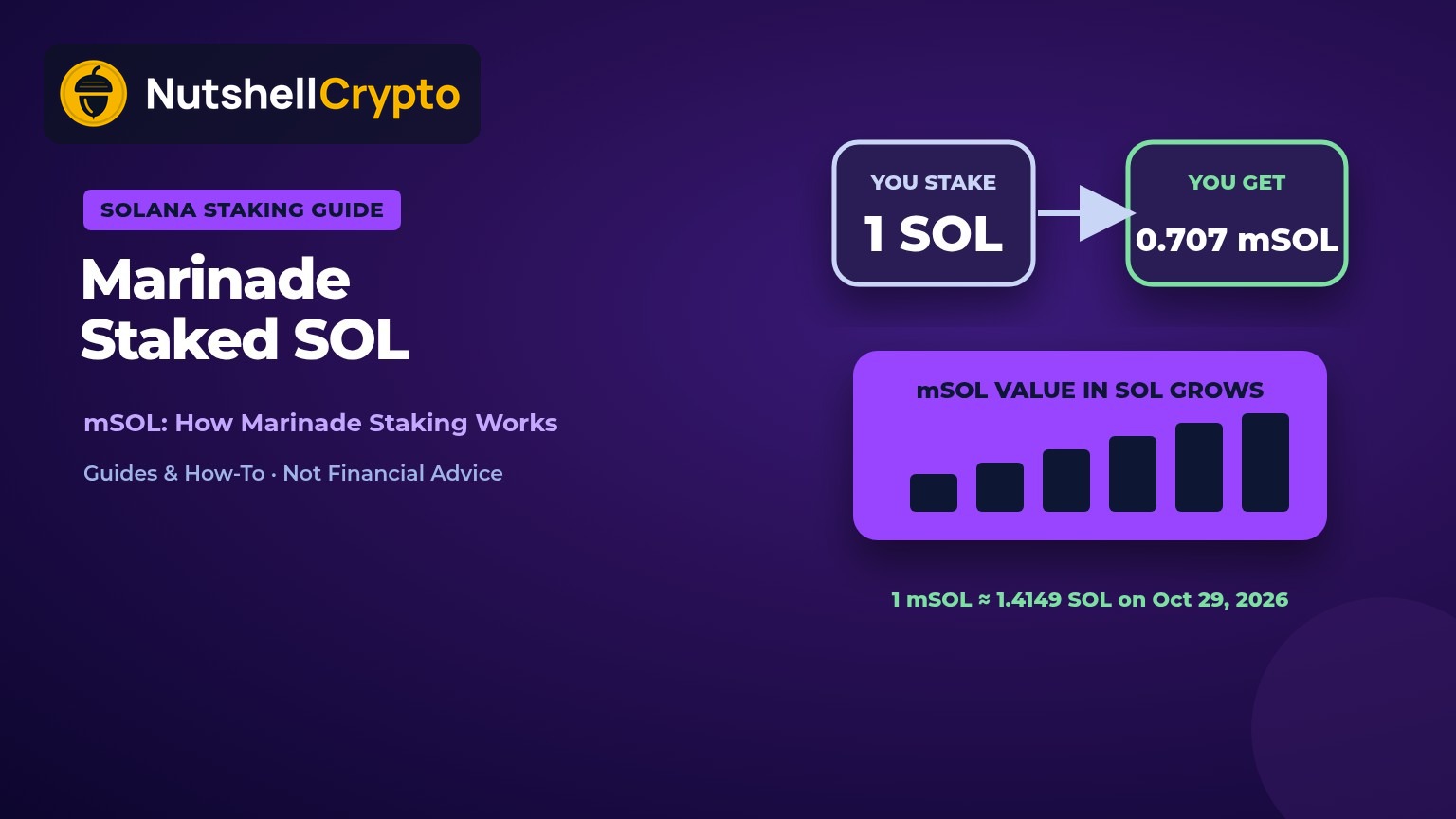
In a nutshell: Marinade staked SOL (mSOL) is the token you get when you stake SOL with Marinade, a liquid staking protocol on Solana. Your mSOL balance stays the same, but each mSOL can be swapped back for more SOL over time as staking rewards come in. On October 29, 2026, 1 mSOL was worth about 1.4149 SOL in Marinade’s own pricing. You can exit instantly through a swap at the market rate, or wait about one epoch (roughly a day) and pay a 0.2% fee. The main risks are smart contract bugs, mSOL trading below its fair value, and SOL’s own price swings. Educational only; not financial advice.
Last updated: October 29, 2026.
Normal SOL staking locks your coins in a stake account. Marinade instead gives you mSOL, a token you can hold, trade or use in Solana apps while the SOL behind it keeps earning.
Below: how mSOL is priced, Marinade Native vs Liquid, staking and unstaking, fees, mSOL vs JitoSOL, and the risks. Live figures were pulled on October 29, 2026, about 10:51 to 10:53 AM PKT.
Table of contents
What Is Marinade?
Marinade Finance is a staking protocol built on Solana. Its docs describe it as a non-custodial liquid staking solution meant to help decentralize the network (Marinade docs). It launched on mainnet in August 2021 (Marinade docs).
Marinade does not run one big validator. It spreads stake across many Solana validators through what it calls the Stake Auction Marketplace (SAM). Every epoch, eligible validators are ranked by the yield they offer stakers, and stake moves toward the highest-yielding ones, within limits meant to protect decentralization (Marinade docs: SAM). Validators must post a bond that protects stakers’ yield.
New to this? Start with what staking is and liquid staking.
How mSOL Works
When you stake SOL with Marinade Liquid, you receive mSOL. Marinade calls it a receipt: you can trade it back later for your staked SOL plus the rewards it earned (Marinade docs: What is mSOL?).
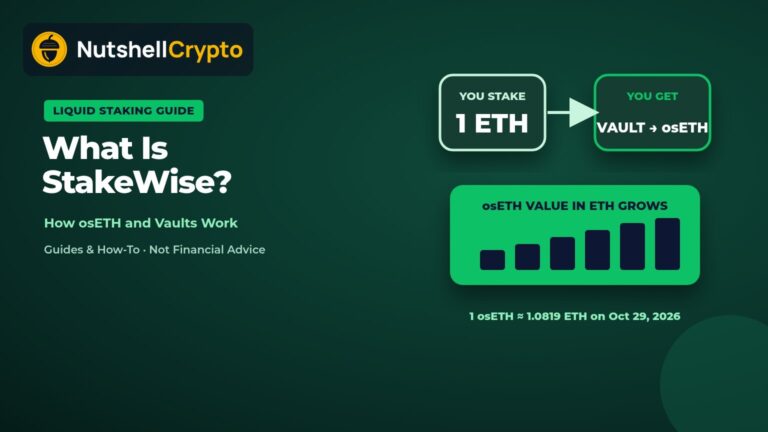
mSOL is a value-accruing token, not a rebasing one. Your mSOL balance never changes, and there is nothing to claim. Instead, Marinade recalculates the mSOL price after every Solana epoch with a simple formula:
mSOL price (in SOL) = total SOL staked in the pool ÷ total mSOL minted
New mSOL is only minted when SOL is deposited at the current rate, so deposits do not dilute holders. Only rewards push the ratio up (Marinade docs).
A worked example
Say you stake 10 SOL when 1 mSOL = 1.41489 SOL. You get about 10 ÷ 1.41489 = 7.0677 mSOL. A year later, your wallet still shows 7.0677 mSOL. If the rate has risen to, say, 1.45 (a made-up number to show the math, not a forecast), that mSOL is now worth about 10.248 SOL. A delayed unstake with the 0.2% fee would return roughly 10.228 SOL. The extra SOL is your staking reward.
mSOL by the Numbers (October 29, 2026)
- mSOL/SOL rate: 1 mSOL = 1.41489 SOL on Marinade’s public API at about 10:52 AM PKT (Marinade API).
- Realized yield: based on how that rate moved, Marinade’s API showed about 5.42% annualized over the past 7 days, 5.03% over 30 days and 5.92% over the past year (Marinade API). DefiLlama’s yields page listed the mSOL pool at 5.42% APY (DefiLlama Yields).
- Market prices: CoinGecko showed mSOL at $141.92 and SOL at $100.48 at 10:51 AM PKT, which works out to about 1.4124 SOL per mSOL on the market, within about 0.2% of the protocol rate (CoinGecko).
- Size: DefiLlama put Marinade Liquid (the mSOL pool) at about $225 million in TVL and Marinade Native at about $358 million (DefiLlama). Marinade’s API showed about 2.26 million SOL in the mSOL pool.
- Solana as a whole: Solana’s public RPC showed about 436.8 million SOL actively staked, roughly 69% of the 636.6 million SOL total supply, across 689 vote accounts in epoch 1071 (Solana RPC).
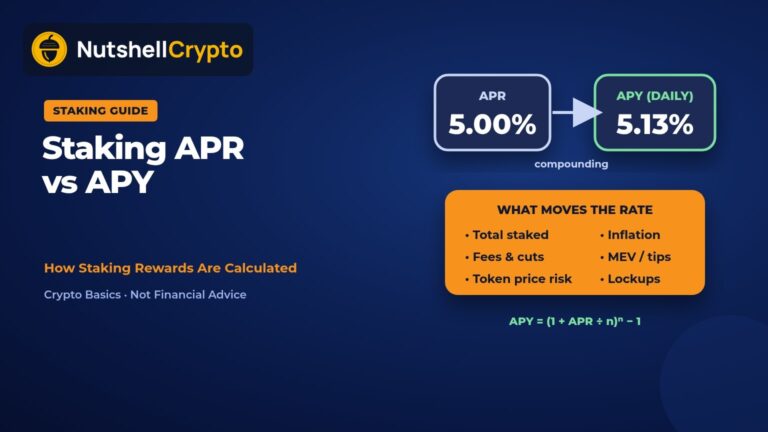
These yields are backward-looking and change every epoch. Our guide to staking APR vs APY explains how to read these rates.
Marinade Native vs Marinade Liquid
Marinade offers two main ways to stake, and they work quite differently (Marinade docs: Marinade Native):
| Marinade Liquid | Marinade Native | |
|---|---|---|
| What you hold | mSOL tokens | Regular Solana stake accounts in your wallet |
| Who can withdraw | Your SOL sits in Marinade’s stake pool | Only you (you keep the withdraw authority) |
| How rewards arrive | mSOL price rises vs SOL | Paid into your stake accounts each epoch |
| Use in DeFi | Yes | No, it is not a token |
| Delayed unstake cost | 0.2% | Flat 0.003 SOL |
With Marinade Native, Marinade only gets the stake authority, which lets it delegate, split and merge your stake accounts but never withdraw them. Marinade calls this “non-custodial, not contract-free,” since delegation still runs through its proxy program. It recommends at least 100 SOL for Native so stake can be spread widely.
A third product, Marinade Select, uses a vetted validator set, but its docs say it is not open to new stake right now (Marinade docs).
How to Stake SOL for mSOL
You need a Solana wallet such as Phantom or Solflare, plus a little extra SOL for network fees.
- Go to Marinade’s official app (marinade.finance). Type the address yourself or use a bookmark; fake staking sites are common.
- Connect your wallet.
- Choose liquid staking (mSOL), enter the amount of SOL, and check how much mSOL you will receive at the current rate.
- Approve the transaction in your wallet. mSOL appears in your wallet once it confirms.
An existing stake account can also be converted if it holds at least 1 SOL, is fully active and is delegated to a validator in Marinade’s set (Marinade docs).
You can also buy mSOL on DEXs at the market price. For the plain, no-token way to stake, see our SOL staking guide.
How to Unstake mSOL
Marinade gives you two exits (Marinade docs):
Instant unstake (a swap)
This is really a swap of mSOL to SOL, mainly via Jupiter, at the market rate. Marinade charges no fee here, but you pay DEX fees, spread and price impact, which grow on large amounts.
Delayed unstake
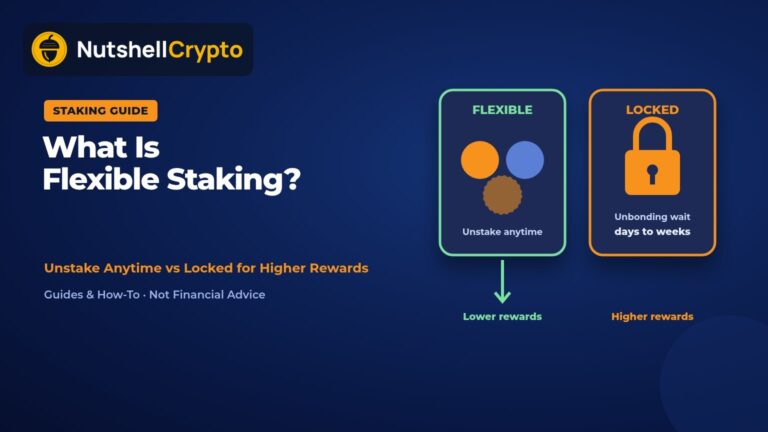
Your mSOL is burned and you get a claim ticket. After about one epoch you return and click Claim. The fee is 0.2% and the minimum is 1.0043 SOL. Starting in the last 2 hours of an epoch delays your SOL by one more epoch.
A Solana epoch is 432,000 slots. At the roughly 280 slots per minute Solana’s RPC showed on October 29, 2026, that is about 25 to 26 hours.
Marinade Fees
Marinade’s fee page says it charges no deposit fee and takes no cut of staking rewards. The stake pool’s on-chain reward fee is set to 0. Its costs come at exit instead (Marinade docs: Fees and Pricing):
- mSOL delayed unstake: 0.2% (20 basis points).
- mSOL instant unstake: no Marinade fee on the swap route. If the app routes through Marinade’s own liquidity pool instead, that pool charges 0.03% to 1.5%, rising as the pool is drained. The app picks whichever route returns the most SOL and shows the quote first.
- Marinade Native delayed unstake: a flat 0.003 SOL, whatever the size.
- Marinade Native instant unstake: set by market makers, typically 0.10% to 0.40%.
Validator commissions are taken before rewards reach the pool, and fees can change by governance vote.
mSOL vs JitoSOL vs Native SOL Staking
JitoSOL, from Jito, is the largest Solana liquid staking token tracked by DefiLlama, at about $1.04 billion in TVL on October 29, 2026, compared with about $225 million for Marinade Liquid (DefiLlama). Both tokens rise in value against SOL; CoinGecko prices at 10:51 AM PKT put JitoSOL at about 1.3076 SOL and mSOL at about 1.4124 SOL. The ratios differ mainly because the tokens launched at 1:1 on different dates.
| mSOL (Marinade) | JitoSOL (Jito) | Native SOL staking | |
|---|---|---|---|
| What you hold | Value-accruing token | Value-accruing token | Stake account |
| Fee on rewards | 0% (Marinade docs) | 4% of staking and MEV rewards (Jito FAQ) | Validator commission only |
| Direct exit fee | 0.2% delayed unstake | 0.1% direct unstake | None (network fee only) |
| Recent yield (DefiLlama, Oct 29) | 5.42% | 4.89% | Depends on validator |
| Validator choice | Stake auction picks | Jito’s delegation rules pick | You pick |
| Usable in DeFi | Yes | Yes | No |
Jito’s figures come from its JitoSOL FAQ, which says the 4% fee works out to about 0.3% of deposited SOL a year, and that its 0.1% fee applies only when you unstake directly on its site. Yields are DefiLlama snapshots and swap places often. This is a comparison, not a recommendation.
Native staking skips the extra contract layer, but your SOL is not usable while staked. For hardware wallets, see our Ledger staking guide covers that setup.
Where mSOL Is Used
Marinade’s docs list these uses (Marinade docs):
- Borrowing: Marinade Borrow lets you borrow against mSOL directly, and other Solana lending apps accept it as collateral.
- Liquidity pools: mSOL/SOL pools avoid most price divergence because the two assets move together; mSOL paired with other tokens carries more risk of losses from price divergence.
- Trading: mSOL trades on most Solana DEXs.
Each app adds its own risk. Borrowing against mSOL can lead to liquidation if SOL drops sharply.
Risks of Marinade Staked SOL
- Smart contract risk. mSOL depends on Marinade’s on-chain programs. Marinade lists 6 audits and 1 code review, most recently by Neodyme in May 2026, plus a bug bounty on Immunefi of up to $250,000 for critical findings on the liquid staking program (Marinade docs: Security).
- Price gap (depeg) and liquidity risk. In a rush for the exits, mSOL can trade below the SOL it represents. Delayed unstake avoids the market but takes about an epoch.
- Validator risk. If validators go offline or raise commissions, rewards drop. Solana’s own docs say slashing, where part of a validator’s stake is destroyed for malicious behavior, is not implemented in the protocol today, but it could be added in the future (Solana docs). Marinade’s validator bonds are meant to protect staker yield, not to cover every loss.
- Governance and admin keys. The mSOL program can be upgraded by a 6-of-13 multisig, most of whose signers come from other Solana teams. Other Marinade programs are controlled by the Marinade DAO through votes with locked MNDE, Marinade’s governance token, and a 5-member council handles day-to-day settings such as fees within DAO-set limits (Marinade docs: Multisig governance). Fees and rules can change by vote. MNDE traded at about $0.024 on CoinGecko at 10:51 AM PKT; you do not need it to use mSOL.
- SOL price risk. A 5% to 6% yield in SOL does not protect you from SOL falling in dollar terms.
- Scam risk. Fake Marinade sites target stakers. Never share your seed phrase; see our self-custody guide.
US and Canada Notes, Including Taxes
Marinade is a wallet-based app with no account sign-up or support desk, so checking whether it suits your situation is up to you.
In the US, SEC staff said in an August 5, 2025 statement that certain liquid staking activities, and the receipt tokens they produce, do not involve offers and sales of securities when the facts match the statement’s description (SEC). It is a staff view, not law, and it does not cover every product. In Canada, crypto platforms answer to provincial securities regulators; our list of regulated crypto exchanges in Canada can help if you buy SOL or mSOL through a platform.
On taxes, the IRS says staking rewards are income when you gain control of them (IRS Rev. Rul. 2023-14). That ruling does not directly address value-accruing tokens like mSOL, and there is no specific IRS guidance on whether swapping SOL into mSOL is a taxable trade. In Canada, the CRA says income from staking can be business income or other income depending on your situation (CRA). Keep records of every deposit, swap and unstake, read our guide to crypto staking taxes, and talk to a tax professional.
FAQ
What is Marinade staked SOL?
It is mSOL, the liquid staking token Marinade gives you when you stake SOL in its pool. It represents your staked SOL plus the rewards it earns, and it can be traded or used in Solana DeFi apps.
Why is 1 mSOL worth more than 1 SOL?
Because rewards are added to the mSOL price instead of your balance. After years of rewards, 1 mSOL was worth about 1.4149 SOL on October 29, 2026, according to Marinade’s API.
How long does it take to unstake mSOL?
Instant unstake settles right away at the market rate. Delayed unstake takes about one epoch, roughly a day, and costs 0.2%.
Can I lose SOL with mSOL?
Yes. A smart contract bug, a sale at a discount, or a fall in SOL’s price can all cost you. Solana has no protocol slashing today, but that could change.
Sources
- Marinade Docs: Protocol overview
- Marinade Docs: What is mSOL?
- Marinade Docs: Marinade Native
- Marinade Docs: Fees and Pricing
- Marinade Docs: Stake Auction Market
- Marinade Docs: Security
- Marinade Docs: Multisig governance
- Marinade API: mSOL price in SOL
- Jito: JitoSOL general FAQs
- CoinGecko: Marinade Staked SOL
- DefiLlama: Marinade Liquid Staking
- DefiLlama: Jito Liquid Staking
- Solana Docs: Staking
- Solana Docs: RPC methods
- SEC: Statement on Certain Liquid Staking Activities
- IRS: Revenue Ruling 2023-14
- CRA: Income from crypto mining and staking
This article is for education only and is not financial, tax or legal advice. mSOL rates, yields and Marinade’s fees change every epoch or by governance vote; check current figures in Marinade’s app and docs before staking.