NEAR Staking: How to Stake NEAR, Rewards and Risks
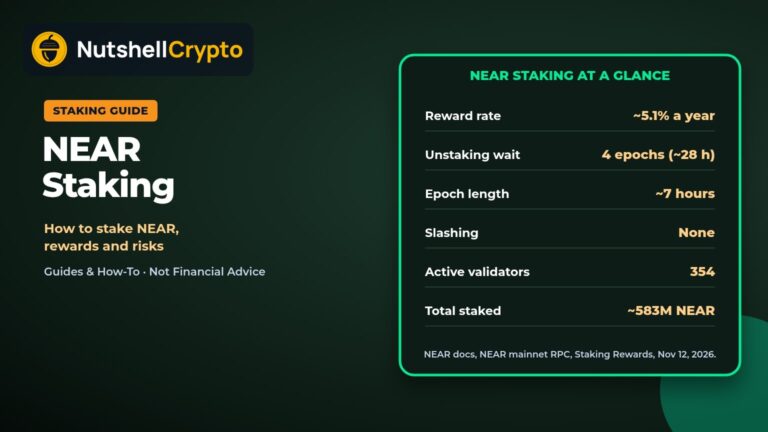
NEAR staking explained: delegate NEAR to a validator pool for about 5.1% a year before fees, a 4-epoch (~28h) unstaking wait, wallets, liquid staking, taxes.

30 articles
NEAR staking explained: delegate NEAR to a validator pool for about 5.1% a year before fees, a 4-epoch (~28h) unstaking wait, wallets, liquid staking, taxes.
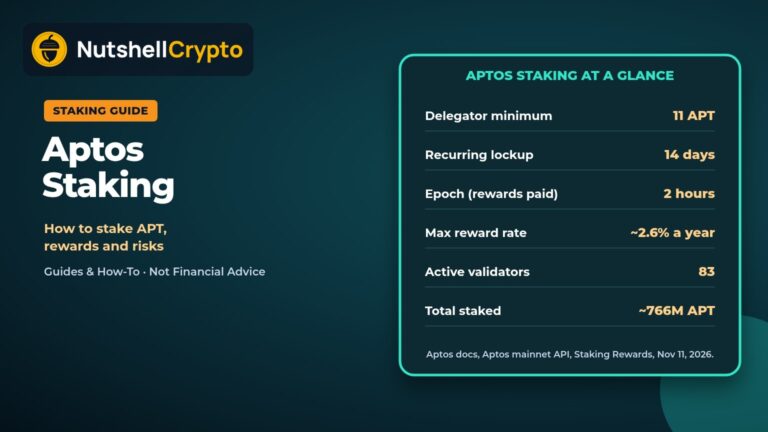
Aptos staking explained: delegate APT from 11 APT with Petra and Aptos Explorer, ~2.6% max APY, 14-day lockup cycle, commission, liquid staking, risks, taxes.
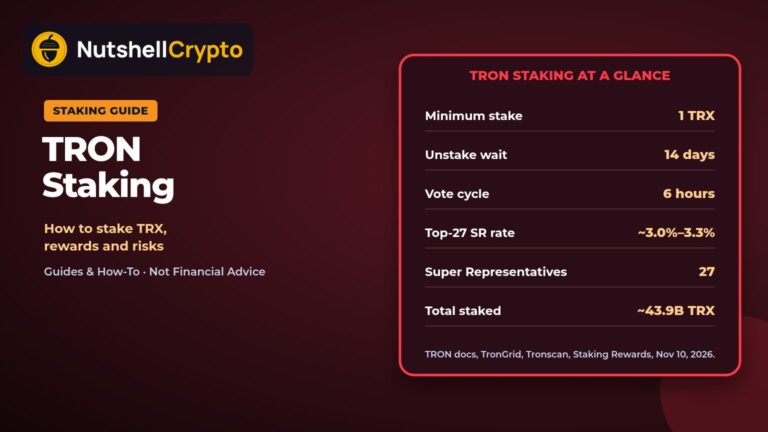
TRON staking explained: stake TRX under Stake 2.0 in TronLink, Tronscan or Ledger, vote for Super Representatives, ~3.3% APY, 14-day unstake, risks and taxes.
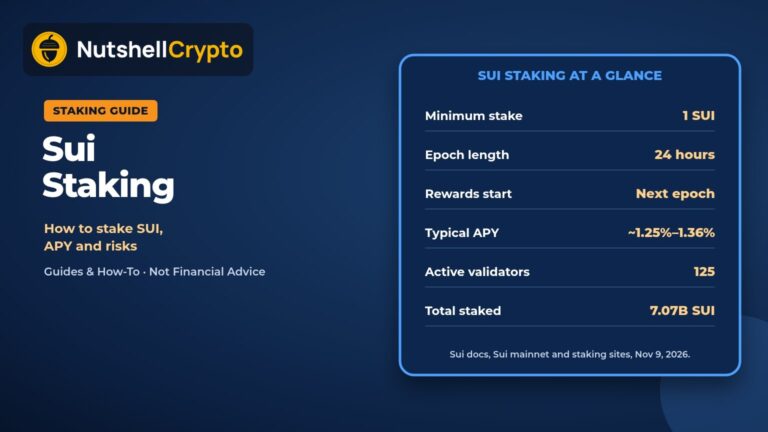
Sui staking explained: stake SUI from 1 SUI with a validator in Slush or Ledger, 24-hour epochs, about 1.3% APY, liquid staking, risks and US, CA, AU tax notes.
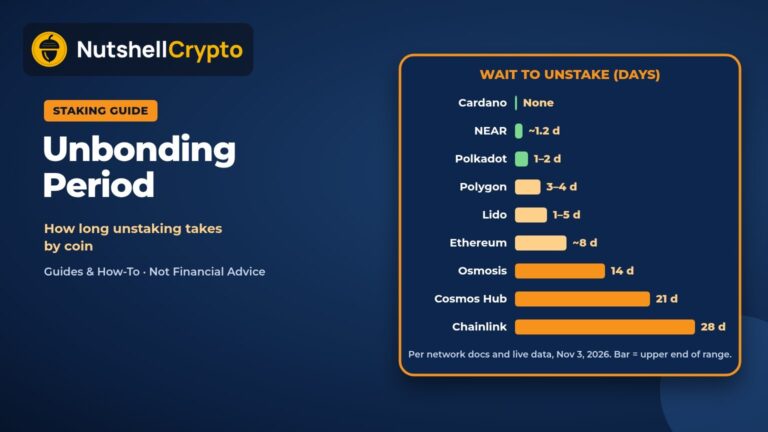
Unbonding period explained: how long unstaking takes on Ethereum, Cosmos, Solana, Cardano, Polkadot, NEAR and more, plus rewards, risks and tax notes.

Figment staking explained: how its non-custodial validators work, staking 32 ETH in Ledger Wallet, the 8% execution-layer fee, unstaking, risks and taxes.

Kiln staking explained: how Kiln’s pooled and 32 ETH validator staking works, the 12% Ledger fee, Solana staking, unstaking, the 2025 incident and risks.

stakefish explained: how its non-custodial Ethereum and Solana staking works, fees, 32 ETH minimum, how to stake and unstake, risks and tax notes.
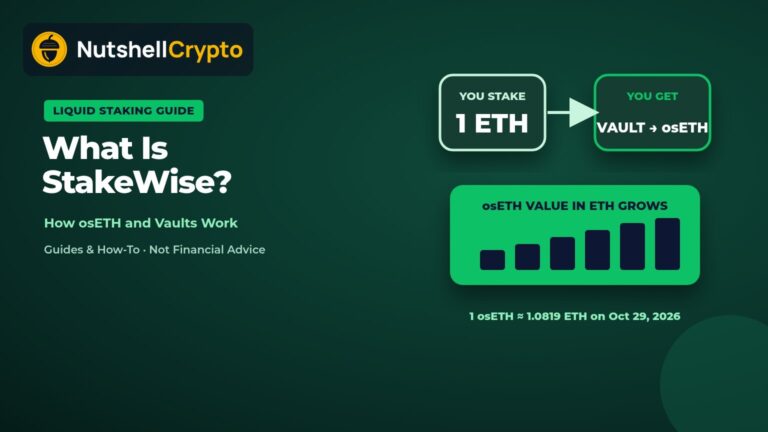
StakeWise explained: how its Vaults and osETH liquid staking token work, fees, Boost, unstaking, the retired sETH2/rETH2 tokens, and the main risks.
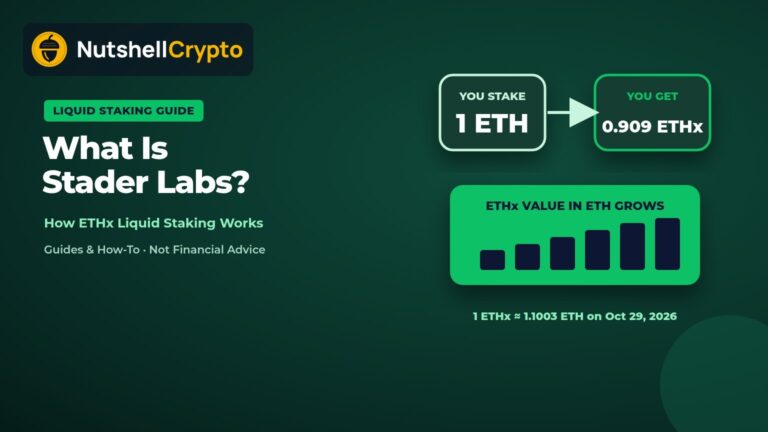
Stader Labs explained: how ETHx liquid staking works, which Stader tokens are still live vs sunset (BNBx, MaticX, NearX), fees, unstaking time and risks.
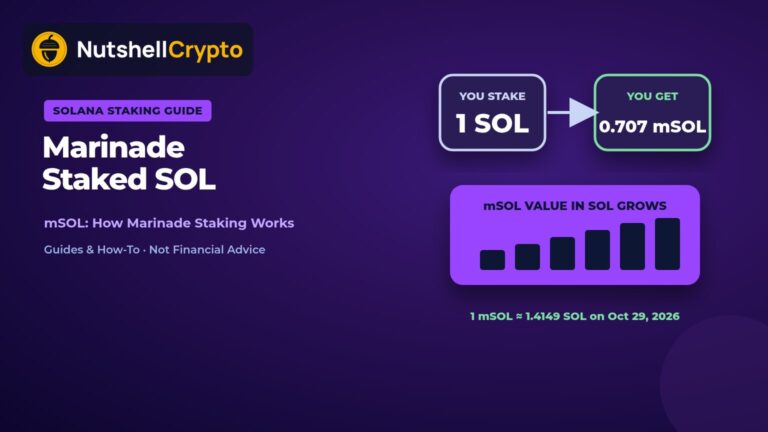
Marinade staked SOL (mSOL) explained: how the mSOL/SOL rate grows, instant vs delayed unstake, fees, mSOL vs JitoSOL vs native staking, and the risks.
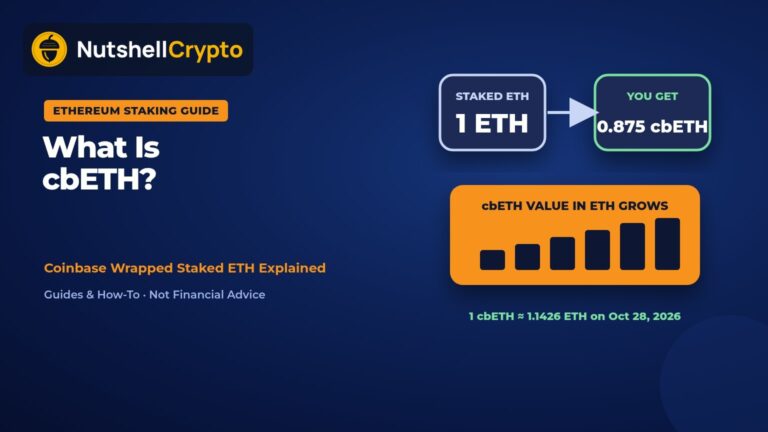
cbETH is Coinbase’s liquid staking token for ETH. How the conversion rate works, how to wrap and unwrap, fees, cbETH vs stETH and rETH, and the real risks.
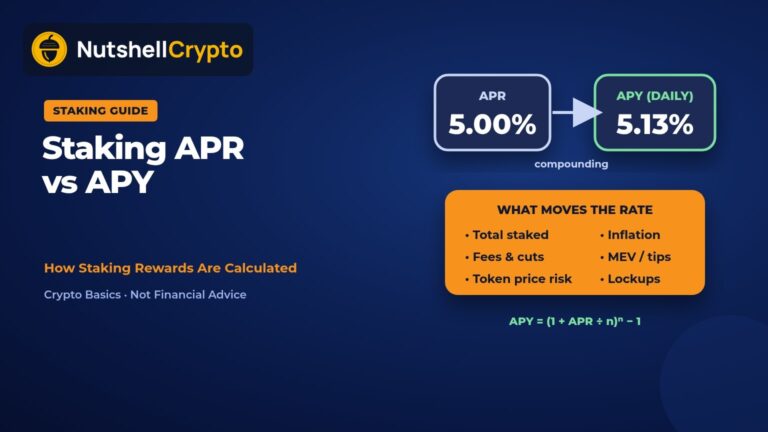
Staking APR explained: APR vs APY with simple compounding math, why staking rates change, real vs nominal yield, provider fees and the risks behind the rate.