Lido Staking: How stETH Works, Fees and Risks
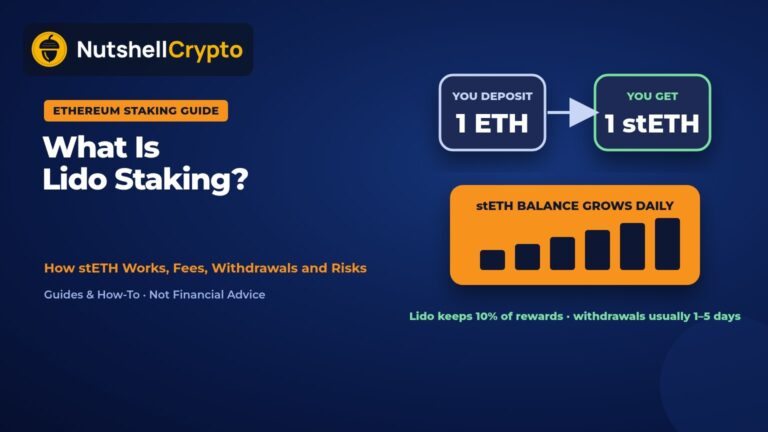
Lido staking turns ETH into stETH, a token whose balance grows daily with staking rewards. How it works, the 10% fee, wstETH, withdrawals and the real risks.

30 articles
Lido staking turns ETH into stETH, a token whose balance grows daily with staking rewards. How it works, the 10% fee, wstETH, withdrawals and the real risks.
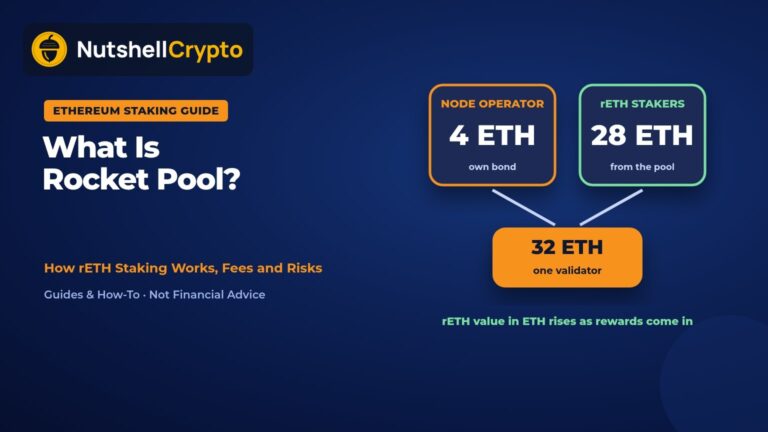
Rocket Pool lets you stake ETH from 0.01 ETH and get rETH, which grows in value as rewards come in. How it works, fees, unstaking, Saturn One and the risks.
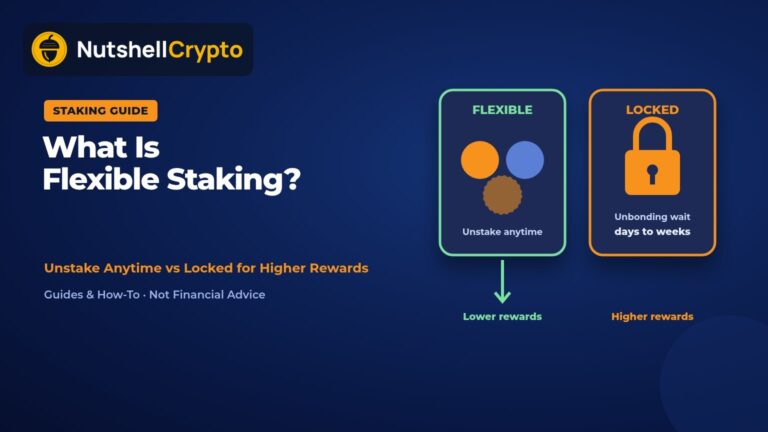
Flexible staking lets you earn rewards and unstake anytime, but usually pays less than locked staking. How it works, real platform terms and the risks.
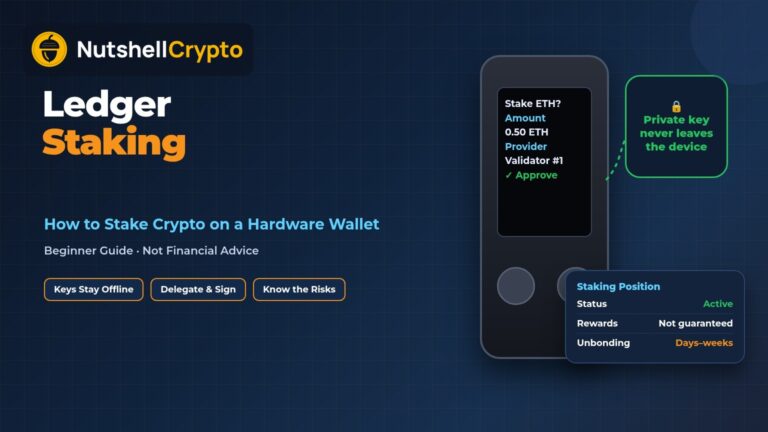
How Ledger staking works: keys stay on the device, supported coins, step-by-step flow, ETH solo, pooled and liquid options, fees, risks and US/Canada tax notes.

Polkadot staking explained: nominating vs nomination pools, the 1 DOT pool minimum, 2-day unbonding, no nominator slashing, rewards, risks and taxes.
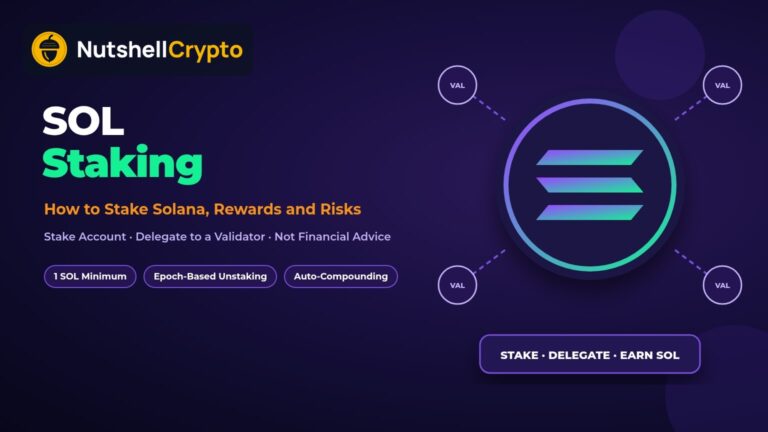
SOL staking explained: stake accounts, validators, epochs, the 1 SOL minimum, how rewards work, liquid staking, risks and US/Canada taxes.
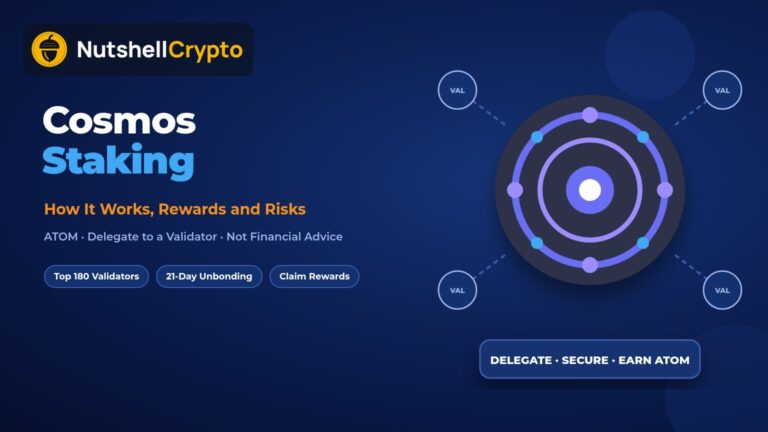
Cosmos staking (ATOM delegation) explained: validators, 21-day unbonding, rewards, slashing, Keplr steps, LSM liquid staking and US/Canada taxes.
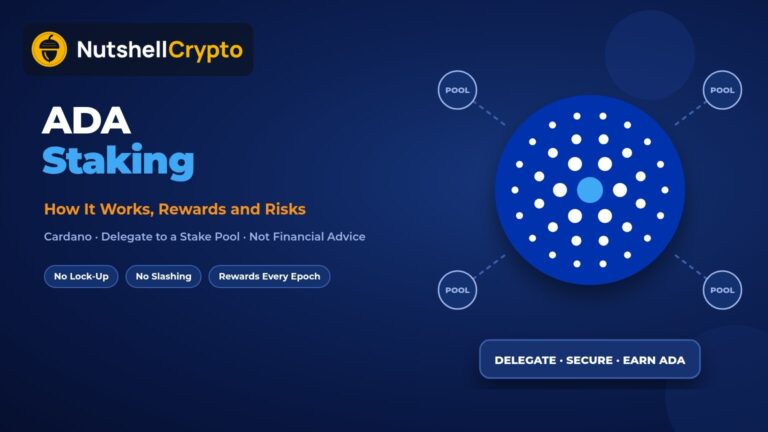
ADA staking explained: delegate any amount to a Cardano stake pool with no lock-up or slashing. Rewards timing, 2 ADA deposit, pool choice, risks and taxes.
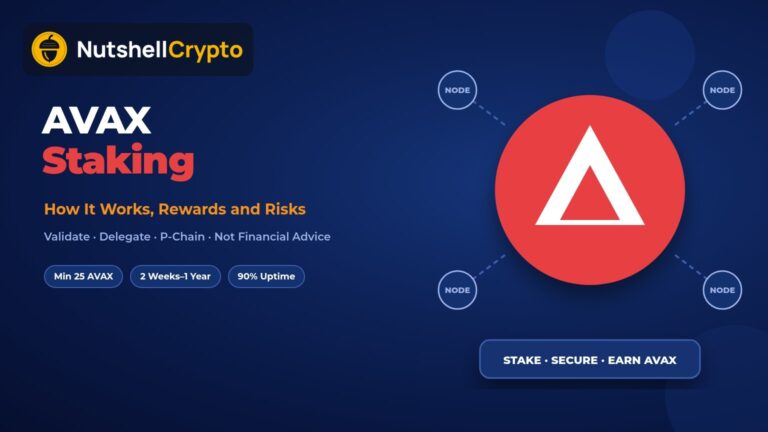
AVAX staking explained: validate with 2,000 AVAX or delegate 25 AVAX on the P-Chain in Core. Lock-up terms, 90% uptime rule, rewards, risks and taxes.
Chainlink staking lets you lock LINK on staking.chain.link to help secure oracle feeds and earn LINK rewards. Pool size, rates, unbonding and risks explained.

Polygon staking means delegating POL to a validator to earn about 3-4% a year. Compare native staking, sPOL and exchanges, plus unbonding time and risks.
Learn how to stake Ethereum four ways: solo, staking-as-a-service, pooled or liquid staking, and exchanges. Compare minimums, risks, and taxes.
Crypto staking taxes explained: when staking rewards count as income, how to value them, how IRS and CRA rules work, and what happens when you later sell.