In a nutshell: Rocket Pool is a decentralized Ethereum liquid staking protocol. You deposit as little as 0.01 ETH and get rETH, a token whose value in ETH slowly rises as staking rewards come in. Independent node operators run the validators, putting up 4 ETH of their own per validator, with 28 ETH coming from rETH holders. You can usually swap rETH back to ETH at any time, but rewards are not guaranteed and you still carry smart contract, depeg and slashing risk. Educational only; not financial advice.
Last updated: October 27, 2026.
Staking ETH on your own takes 32 ETH, a computer that stays online and some technical skill. Rocket Pool is one of the oldest ways around that: it pools small deposits from many people and pairs them with node operators who do the technical work.
This guide explains what Rocket Pool is, how rETH earns rewards, how staking and unstaking actually work, what changed with the 2026 “Saturn One” upgrade, and the risks to understand before you put ETH into it.
Table of contents
What Is Rocket Pool?
Rocket Pool is a set of smart contracts on Ethereum that lets people stake ETH without running a validator themselves. It officially launched on Ethereum mainnet on November 9, 2021, according to the project’s own timeline.
It is a form of liquid staking: instead of your ETH disappearing into a lock-up, you receive a token (rETH) that you can hold, trade or use in other apps while your ETH keeps earning. Rocket Pool says anyone can stake “as little as 0.01 ETH” (Rocket Pool Docs).
Its main selling point is decentralization. Anyone who meets the bond requirement can become a node operator without permission, and a February 2026 Rocket Pool blog post described the network as “powered by almost 2,000 independent node operators worldwide” (Rocket Pool on Medium).
By size, it is far smaller than the market leader. DefiLlama showed Rocket Pool’s total value locked at about $1.13 billion, against about $22.4 billion for Lido, when we checked at 4:31 PM PKT on October 27, 2026 (DefiLlama).
How rETH Works
rETH is a “value-accruing” token. Your rETH balance never grows. Instead, each rETH becomes worth a little more ETH over time.
The Rocket Pool docs explain that the rETH-to-ETH rate reflects rewards from three sources: the Beacon Chain itself, priority fees from block proposals and MEV rewards. The exchange rate “is updated approximately every 24 hours” (Rocket Pool Docs).
A simple example from the docs: if you deposit 10 ETH when 1 rETH equals 1 ETH, you get 10 rETH. If the pool’s balance later grows so that 1 rETH is worth 1.25 ETH, your 10 rETH can be swapped back for 12.5 ETH.
That rate has been rising since 2021. On October 27, 2026 at 4:31 PM PKT, CoinGecko showed rETH at about $2,716 and ETH at about $2,311, so 1 rETH was worth roughly 1.175 ETH (CoinGecko).
This is different from Lido’s stETH, where your token balance itself goes up each day. Our liquid staking guide covers both token designs side by side.
Who Runs the Validators?
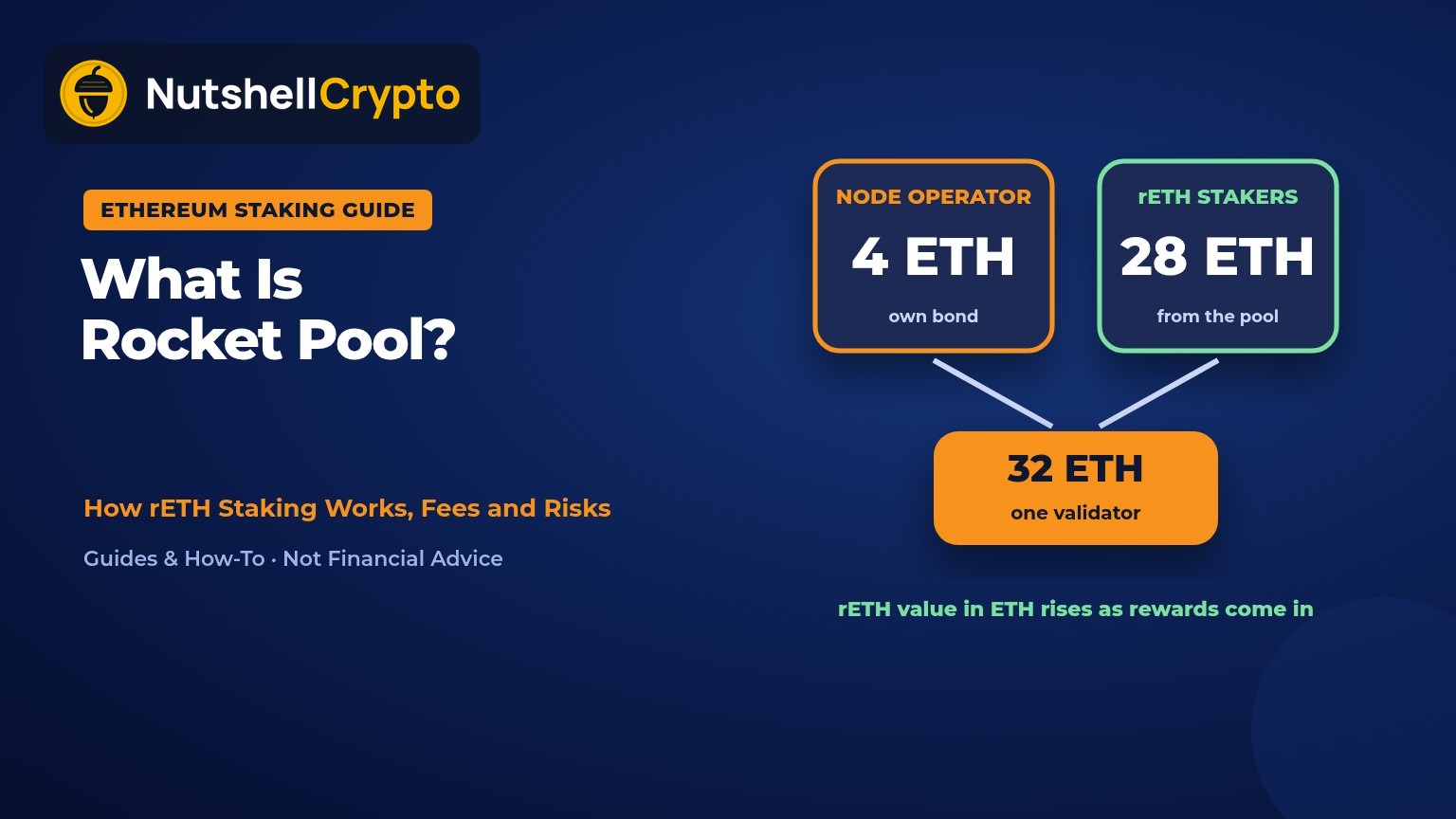
Every Ethereum validator needs 32 ETH. In Rocket Pool, that 32 ETH comes from two places:
- The node operator’s bond. Since the Saturn One upgrade went live on February 18, 2026, operators put up 4 ETH of their own per validator, down from 8 ETH before (Rocket Pool Docs: Saturn 1).
- rETH holders’ ETH. The other 28 ETH comes from the deposit pool, which is where your staked ETH goes.
Saturn One also introduced “megapools,” a single smart contract per operator that can manage many validators, which Rocket Pool says lowers gas costs for operators. To the Beacon Chain, a megapool validator “looks exactly the same as a normal validator” (Rocket Pool Docs).
The bond matters to you as a staker. The operator’s own ETH sits in front of yours, so a poorly run or penalized validator eats into the operator’s stake first. That is why Rocket Pool calls rETH “overcollateralised.” It reduces risk; it does not remove it.
How to Stake With Rocket Pool
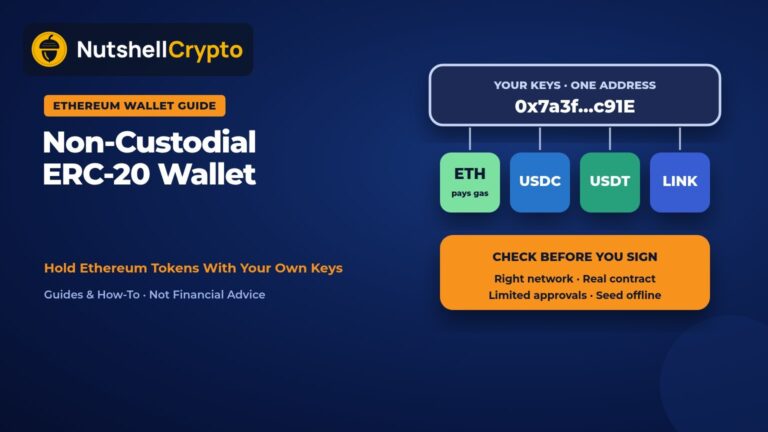
All routes need a self-custody Ethereum wallet such as MetaMask. If you are new to that, read our self-custody guide first. The docs describe three main ways to get rETH:
- Directly from the protocol. On stake.rocketpool.net, you connect your wallet, enter an amount and stake. The protocol route gives you “exactly as much rETH as your ETH is worth (minus a 0.05% deposit fee),” with no slippage, but you pay Ethereum gas (Rocket Pool Docs: Staking directly).
- Through CoW Swap on the same site. The staking page can route your order through CoW Swap, a third-party DEX aggregator. Rocket Pool warns this route “is not part of the Rocket Pool protocol” and can bring slippage and other third-party risks.
- Buying rETH on a DEX. You can swap for rETH on a decentralized exchange such as Balancer or Uniswap on Ethereum, or on a layer 2 network like Arbitrum or Optimism where fees are lower.
Expect to receive fewer rETH than the ETH you put in. That is normal: because 1 rETH is worth more than 1 ETH, 1 ETH buys less than 1 rETH.
Safety tips from the docs are worth repeating: check you are on the real site (stake.rocketpool.net), start with a small test amount, and compare the gas fee to the size of your stake. On a small deposit, gas fees can wipe out months of rewards.
How Unstaking Works
Rocket Pool has no fixed lock-up for rETH holders, but getting ETH back is not always instant through the protocol itself.
- Protocol route. You can trade rETH back to the protocol at the official rate only if it holds enough spare ETH. The docs say protocol unstaking “is only possible when the deposit pool has enough ETH,” and the site shows “Insufficient liquidity” when it does not.
- Market route. If the protocol is short of ETH, you sell rETH on a DEX or through CoW Swap. That always works as long as there are buyers, but you may get slightly less than the official rate.
Saturn One added a withdrawal buffer to make protocol exits easier. ETH from new deposits now goes to the rETH contract first, until the buffer reaches a target of about 1% of rETH’s value (around 5,090 ETH when the change was announced), before the rest is sent to node operators (Rocket Pool on Medium).
Compare that with solo staking ETH, where leaving means waiting in Ethereum’s validator exit queue.
Fees and Rewards
rETH holders do not pay a separate management fee. Instead, a share of the rewards earned on their ETH goes to others in the system:
- Deposit fee: 0.05% when you stake through the protocol route.
- Commission: Under Saturn One, node operators get a 5% base commission on rewards from the 28 ETH they borrow, and a further 9% is shared among operators who stake RPL, Rocket Pool’s governance token. Rocket Pool says this keeps the effective commission for rETH holders at “14% max,” the same level as before (Rocket Pool on Medium).
Those splits are set by Rocket Pool’s governance and can change.
What does that leave you? DefiLlama’s yield tracker showed rETH at about 1.82% APY, with a 30-day average of about 2.06%, at 4:31 PM PKT on October 27, 2026. Lido’s stETH showed about 2.24% at the same time (DefiLlama Yields). These are rewards in ETH terms. If the price of ETH falls, your position can still lose value in dollars.
Rocket Pool vs Lido vs Exchange Staking
| Rocket Pool (rETH) | Lido (stETH) | Exchange staking | |
|---|---|---|---|
| Who holds your coins | Smart contracts; you hold rETH in your own wallet | Smart contracts; you hold stETH in your own wallet | The exchange |
| Who can run validators | Anyone with a 4 ETH bond | Mostly operators approved through Lido governance, plus a permissionless community module | The exchange or its partners |
| How rewards show up | rETH’s ETH value rises | stETH balance grows daily | Extra coins credited to your account |
| Minimum | 0.01 ETH | Check the current app | Set by the exchange |
| Size (DefiLlama, Oct 27, 2026) | About $1.13B TVL | About $22.4B TVL | Varies |
Exchange staking is simpler but means trusting a company with your coins. Some exchanges also offer flexible staking, which lets you leave any time in return for a lower rate.
For how stETH, Lido’s 10% fee and its withdrawal queue work, see our guide to Lido staking.
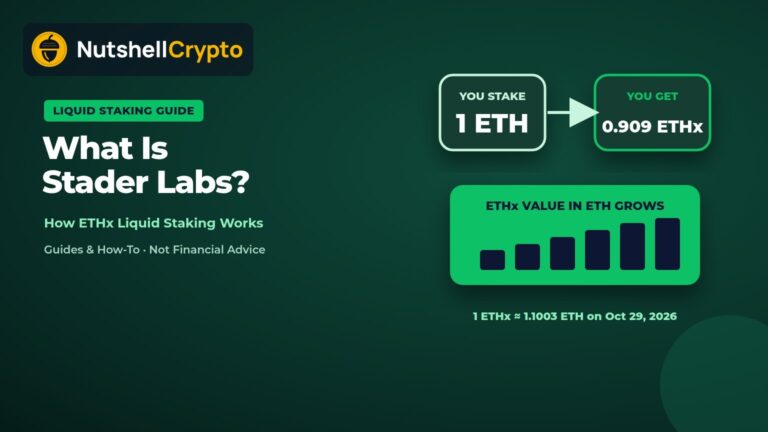
Stader’s ETHx also lets operators join with a 4 ETH bond; see our guide to Stader Labs for how its design and fees compare.
Risks of Rocket Pool Staking
Smart contract risk
Your ETH sits in code that could have bugs. Rocket Pool lists many audits, including the original 2021 reviews by Sigma Prime, Consensys Diligence and Trail of Bits, and Saturn One audits by Sigma Prime, Cantina and Bailsec (Rocket Pool Security). It also runs a bug bounty on Immunefi with a maximum payout of $150,000 (Immunefi). Audits lower the risk of a hack; they cannot rule it out.
Depeg and liquidity risk
rETH’s market price can drift below its official value, especially in a panic when many people sell at once and the protocol’s ETH buffer runs dry. If you need ETH right then, you may have to sell at a discount.
Slashing and penalties
Validators that go offline or break Ethereum’s rules lose ETH. The operator’s bond absorbs losses first, but a large or widespread failure could still affect rETH holders.
Governance and upgrade risk
Rocket Pool’s commission split, bond size and buffer target are all governance settings. Saturn One, for example, gives the protocol “forced delegate upgrades” so it can update operators’ contracts more easily (Rocket Pool Docs). Rules you sign up under can change later.
DeFi stacking risk
rETH can be lent, used as collateral or put into yield vaults. Each extra app adds its own risks, and borrowing against rETH can lead to liquidation if prices move against you.
Phishing
Fake staking sites and fake support accounts are common. Bookmark the official site and never share your seed phrase.
US and Canada Notes
United States: In an August 5, 2025 staff statement, the SEC’s Division of Corporation Finance said that, depending on the facts, certain liquid staking activities and “Staking Receipt Tokens” do not involve the offer and sale of securities (SEC). That is a staff view, not a law, and it does not protect you from losses.
Canada: Rocket Pool is a self-custody DeFi protocol, not a registered Canadian platform, so it does not come with the protections of a regulated exchange. See our guide to regulated crypto exchanges in Canada for what registration does and does not cover.
Taxes on rETH
Swapping ETH for rETH, and rETH back to ETH, may count as a disposal in both the US and Canada. Rocket Pool’s own docs note that converting ETH to rETH “may be considered a taxable event in many jurisdictions.”
The harder question is the rewards. The IRS says staking rewards are income when you gain control of them (IRS Rev. Rul. 2023-14), but it has not issued specific guidance on value-accruing tokens like rETH, where you never receive new coins. In Canada, the CRA treats staking rewards as income or capital depending on your situation (CRA). Keep records of every swap and talk to a tax professional. Our crypto staking taxes guide covers the basics.
FAQ
Is Rocket Pool safe?
It is one of the longest-running Ethereum staking protocols and has been audited many times, but no DeFi protocol is risk-free. Smart contract bugs, depegs and slashing can all cause losses.
What is the minimum to stake on Rocket Pool?
0.01 ETH, according to the Rocket Pool docs. Gas fees can make very small deposits uneconomical.
Why did I get less rETH than the ETH I deposited?
Because 1 rETH is worth more than 1 ETH. You received the same value in a token that already includes past rewards.
What is RPL?
RPL is Rocket Pool’s governance token. Since Saturn One, node operators who stake RPL earn a share of protocol commission in ETH. You do not need RPL to stake ETH for rETH.
Can I run a Rocket Pool node?
Yes, if you have at least 4 ETH per validator and can keep a node running reliably. It is far more technical than holding rETH.
Sources
- Rocket Pool Docs: Staking Overview
- Rocket Pool Docs: Staking Directly via Rocket Pool
- Rocket Pool Docs: The Saturn 1 Upgrade
- Rocket Pool: All About Saturn One (Feb 9, 2026)
- Rocket Pool: About
- Rocket Pool: Security and audits
- Immunefi: Rocket Pool bug bounty
- DefiLlama: Rocket Pool
- DefiLlama: Yields
- CoinGecko: Rocket Pool ETH
- SEC: Statement on Certain Liquid Staking Activities (Aug 5, 2025)
- IRS: Revenue Ruling 2023-14
- CRA: Income from crypto mining and staking
This article is for education only and is not financial, tax or legal advice. Rates, fees and protocol rules change; check Rocket Pool’s current documentation before staking.