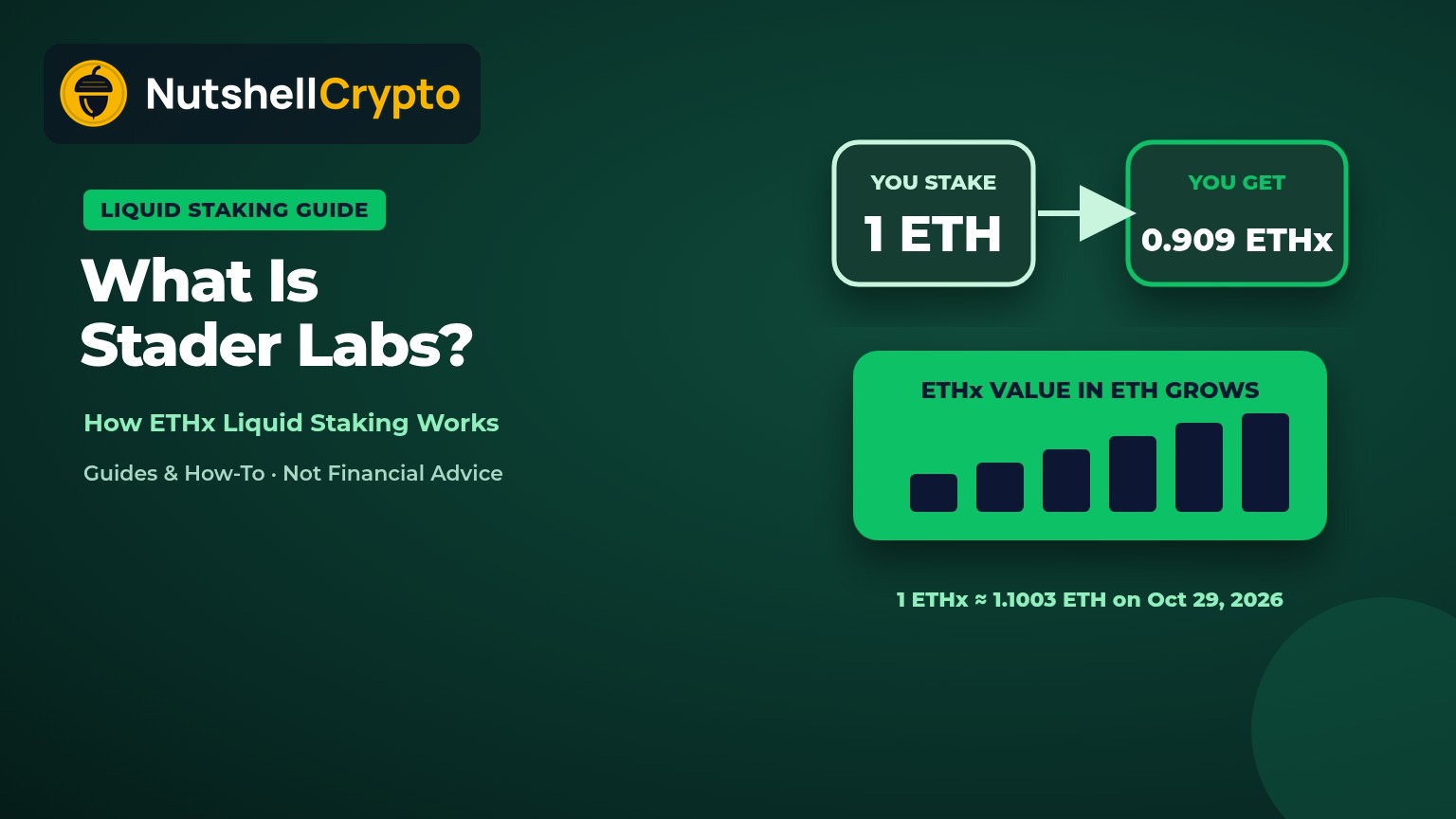
In a nutshell: Stader Labs is a liquid staking platform. Its main product today is ETHx: you stake ETH, get ETHx back, and each ETHx slowly becomes worth more ETH as staking rewards come in. On October 29, 2026, 1 ETHx was worth about 1.1003 ETH according to Stader’s own contract. Stader also still runs HBARX on Hedera, but it has shut down its BNB Chain, Polygon and NEAR tokens, which can now only be redeemed. Stader keeps 10% of ETH staking rewards, and unstaking ETHx through Stader takes about 7 to 10 days. The main risks are smart contract bugs, ETHx trading below its fair value, and the chance that Stader winds down a product. Educational only; not financial advice.
Last updated: October 29, 2026.
Stader is one of the smaller names in liquid staking, next to giants like Lido. It used to support a long list of blockchains. Today it is mostly an Ethereum protocol, and that change matters if you hold, or are thinking about buying, any Stader token.
Below: what Stader Labs is, which of its tokens are still live, how ETHx works, who runs the validators, fees, unstaking, the SD token, and the risks. Live figures were pulled on October 29, 2026, at about 1:20 PM PKT.
Table of contents
- What is Stader Labs?
- Which Stader tokens are still live?
- How ETHx works
- Stader by the numbers
- Who runs ETHx validators?
- How to stake ETH with Stader
- How to unstake ETHx
- Stader fees
- HBARX: Stader on Hedera
- What is the SD token?
- Stader vs Lido vs Rocket Pool
- Security and governance
- Risks of Stader liquid staking
- US and Canada notes, including taxes
- FAQ
What Is Stader Labs?
Stader describes itself as a non-custodial, smart contract-based liquid staking platform that builds staking tools for retail users, exchanges, custodians and institutions (Stader docs). Its CEO and co-founder is Amitej Gajjala, according to the same page.
Like other liquid staking protocols, Stader takes your coins, stakes them with validators, and hands you a token that represents your share of the pool plus rewards. You can hold that token, trade it, or use it in DeFi apps while the coins behind it keep earning. If the idea is new to you, read our guide to liquid staking first, or start with what staking is.
Stader’s homepage still lists Ethereum, Polygon, BNB, Hedera, Fantom, Terra 2.0 and NEAR as supported networks (Stader Labs). That list is out of date, as the next section shows.
Which Stader Tokens Are Still Live?
Stader has been cutting back to fewer chains. Its October 26, 2026 announcement says NearX, BNBx and MaticX “have all been sunset and can only be redeemed” (Stader blog). Here is where each token stands:
| Token | Network | Status (Oct 29, 2026) |
|---|---|---|
| ETHx | Ethereum (staking also on Arbitrum One) | Live: stake and unstake |
| HBARX | Hedera | Live: stake and unstake |
| MaticX | Polygon (token on Ethereum) | Wound down June 2026. Fixed at 1.2002 POL per MaticX from Oct 29, 2026; redeem on Etherscan until Aug 3, 2029 |
| BNBx | BNB Smart Chain | Sunset Jan 29, 2026. From Oct 29, 2026, claim by email at 1.1099 BNB per BNBx, minus a 0.2 BNBx fee, paid quarterly |
| NearX | NEAR | Sunset Dec 13, 2023. From Oct 29, 2026, claim by email at 1.1724 NEAR per NearX, minus a 30 NearX fee, paid quarterly |
Stader says it is moving the remaining NEAR and BNB into custody addresses because the old contracts are no longer maintained. Because the claim fees are a fixed number of tokens, they take a much bigger bite out of small balances. DefiLlama shows Stader’s TVL on Fantom, Terra 2.0, BNB Chain and NEAR at zero (DefiLlama).
If you still hold BNBx, NearX or MaticX, follow only the steps on Stader’s own blog. Stader says it will never DM you or ask for your seed phrase.
How ETHx Works
When you stake ETH with Stader, you receive ETHx. Like rETH and cbETH, ETHx is a value-accruing token: your ETHx balance stays the same, and each token becomes redeemable for more ETH over time. Stader’s docs define the rate like this (Stader docs: Rewards):
ETHx exchange rate = total ETH in the Stader staking pool ÷ total ETHx in circulation
The rate started at 1 when ETHx launched and rises as rewards are added. The ETHx contracts cannot read Ethereum’s validator data directly, so a small committee of oracle operators reports the pool’s balances on-chain. Stader’s docs list three members (Stakely, Ethereum community member Mark Zeller, and Stader itself), and a majority must agree before the rate updates. If a new rate jumps too far from the last one, the system enters an “inspection mode” until it is checked (Stader docs: Oracles).
A worked example
Say you stake 10 ETH when 1 ETHx = 1.10025 ETH. You receive about 10 ÷ 1.10025 = 9.089 ETHx. A year later, you still hold 9.089 ETHx. If the rate has climbed to, say, 1.13 (a made-up number to show the math, not a forecast), that ETHx is now worth about 10.27 ETH. The extra 0.27 ETH is your share of staking rewards after Stader’s fee.
For more on how annual rates like these are quoted, see our guide to staking APR vs APY.
Stader by the Numbers (October 29, 2026)
- ETHx exchange rate: 1 ETHx = 1.10025 ETH, read from Stader’s staking pool manager contract on Ethereum at about 1:20 PM PKT. The ETHx token contract showed about 66,011 ETHx in supply (Etherscan: ETHx).
- Market prices: CoinGecko showed ETHx at $2,545.03 and ETH at $2,315.45 at 1:20 PM PKT. That works out to about 1.0992 ETH per ETHx on the market, roughly 0.1% below the contract rate (CoinGecko: ETHx).
- Size: DefiLlama put Stader’s total value locked at about $205 million: about $176 million on Ethereum and about $29 million on Hedera. For comparison, Lido was at about $22.4 billion and Rocket Pool at about $1.13 billion (DefiLlama). Stader’s TVL peaked near $995 million in April 2022, according to DefiLlama’s history.
- Yield: DefiLlama’s yields page listed the ETHx pool at about 2.27% APY, close to stETH at 2.25% and above rETH at 1.83% (DefiLlama Yields). These are backward-looking snapshots and change daily.
- SD token: $0.1155 on CoinGecko at 1:20 PM PKT, with a market cap of about $8.8 million (CoinGecko: Stader).
Who Runs ETHx Validators?
ETHx uses two pools of node operators (Stader docs: Ethereum):
- Permissionless pool: anyone can run an ETHx validator by putting up a 4 ETH bond. Stader adds 28 ETH from stakers to make the 32 ETH an Ethereum validator needs. Operators must also bond at least 0.4 ETH worth of SD tokens per validator (Stader docs: Permissionless node operators). Operators who don’t hold SD can borrow it from the SD Utility Pool for a fee.
- Permissioned pool: curated, professional operators chosen for consistent performance.
The 4 ETH bond works as a first layer of protection. Stader’s docs say a validator’s bond covers losses from slashing or other network penalties, and operators only get back what is left after stakers are made whole. Operators must also pre-sign an exit message, so Stader can force a badly performing validator to exit (Stader docs: ETHx Security).
This design is similar to Rocket Pool, which also lets operators join with a smaller bond. Our Rocket Pool guide explains its version.
How to Stake ETH With Stader
You need an Ethereum wallet such as MetaMask and some extra ETH for gas.
- Go to Stader’s official ETH staking app from staderlabs.com. Type the address yourself or use a bookmark; fake staking sites are common.
- Connect your wallet and pick Ethereum or Arbitrum One.
- Enter the amount of ETH. The minimum is 0.0001 ETH and there is no maximum (Stader docs: Stake).
- Check how much ETHx you will get at the current rate, then confirm in your wallet.
Stader charges no deposit fee; you only pay network gas. On Arbitrum One you can stake ETH for ETHx, but to exit you must swap on a DEX or bridge your ETHx back to Ethereum first. You can also buy ETHx on DEXs at the market price. For other ways to stake, including solo staking and exchanges, see our guide on how to stake Ethereum.
How to Unstake ETHx
There are two ways out:
Unstake through Stader
You approve and submit an unstake request in the Stader app. Stader’s docs say requests are typically processed within 7 to 10 days, depending on Ethereum’s entry and exit queues. Once ready, you click Withdraw to claim your ETH (Stader docs: Unstake).
Two details matter. First, your ETHx stops earning rewards as soon as you request to unstake. Second, you get the lower of the exchange rate when you request and the rate when your request is finalized, so the final amount can differ slightly from what the app first shows.
Swap on a DEX
You can swap ETHx for ETH right away on a decentralized exchange. You pay swap fees and accept the market rate, which can sit below the contract rate, especially on large trades or during market stress.
Stader Fees
Stader’s docs list these costs for ETH staking (Stader docs: Fees):
- Rewards fee: 10% of staking rewards, shared between the Stader protocol and node operators. The yield shown in the app is already after this cut.
- Deposit or custody fee: none.
- Transaction fees: only Ethereum or Arbitrum gas.
That 10% is the same headline fee Lido charges, as covered in our Lido staking guide.
HBARX: Stader on Hedera
HBARX is Stader’s liquid staking token for HBAR. It works the same way as ETHx: the HBARX-to-HBAR rate rises as rewards come in (Stader docs: HBARX). Unstaking takes about 24 hours, in line with Hedera’s native unstaking time (Stader docs: Withdraw). Stader’s docs now list a 12% protocol fee on HBARX rewards (Stader docs: Hedera fees), and outposts.io reported the rise to 12% in August 2026 (Outposts).
If you’d rather stake HBAR without a token, some hardware wallet apps support it; see our Ledger staking guide.
What Is the SD Token?
SD is Stader’s governance token (Stader docs). It also has a working role in ETHx:
- Operator collateral: permissionless operators bond 0.4 to 8 ETH worth of SD per validator and earn SD rewards on it.
- SD Utility Pool: SD holders can lend their SD to operators who need it and earn a fee (Stader docs: SD Utility Pool).
You do not need SD to stake ETH or receive ETHx. SD’s price moves on its own and has little to do with how much ETH your ETHx is worth.
Stader vs Lido vs Rocket Pool
| Stader (ETHx) | Lido (stETH) | Rocket Pool (rETH) | |
|---|---|---|---|
| How rewards show up | ETHx’s ETH value rises | stETH balance grows (wstETH accrues value) | rETH’s ETH value rises |
| Who can run validators | Permissionless (4 ETH bond + SD) and permissioned pools | Mostly curated operators, plus a permissionless module | Permissionless operators with a bond |
| Rewards fee | 10% | 10% | See our Rocket Pool guide |
| TVL (DefiLlama, Oct 29, 2026) | About $205M (all chains) | About $22.4B | About $1.13B |
| APY (DefiLlama Yields, Oct 29) | 2.27% | 2.25% | 1.83% |
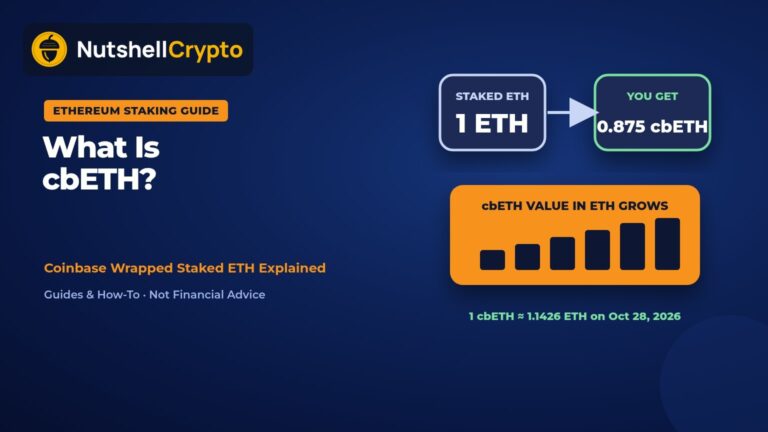
The yields are close. The bigger differences are size and liquidity: a much smaller token is usually harder to sell in size without a discount. Coinbase’s exchange-issued alternative is covered in our cbETH guide. This is a comparison, not a recommendation.
Stader’s docs also mention a past campaign for restaking ETHx through Kelp, which stacks another protocol’s risk on top.
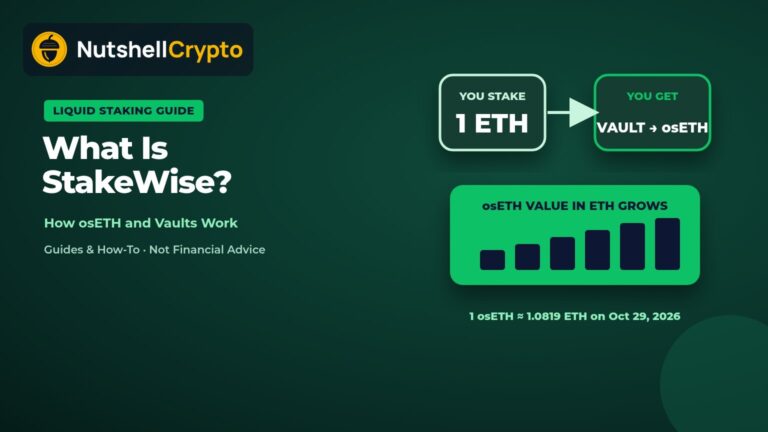
Another mid-sized option is StakeWise, whose osETH is minted against isolated Vaults; our guide to StakeWise explains how it works.
Security and Governance
- Audits: Stader’s docs say ETHx was audited by Sigma Prime, Halborn and Code4rena, covering the smart contracts, node software, oracles and off-chain parts (Stader docs: Audit reports).
- Bug bounty: the docs advertise up to $1 million on Immunefi for ETHx bugs (Stader docs).
- Admin keys: a 6-of-9 community multisig of Ethereum community members and Stader’s CEO can upgrade or unpause the ETHx contracts through a timelock with at least a 7-day delay. A 3-of-6 manager multisig can pause contracts in emergencies and change settings, and the Stader team controls an operator role for node management and validator exits (Stader docs: Admin multi-sig).
- Safe mode: if many Ethereum validators are slashed at once, or more than half of ETHx validators go offline, withdrawals can be switched off until conditions return to normal (Stader docs).
Audits lower risk but do not remove it.
Risks of Stader Liquid Staking
- Smart contract and oracle risk. ETHx depends on upgradeable contracts and on a three-member oracle committee to report the exchange rate. Stader’s own risk page names exchange rate manipulation as a risk (Stader docs: Staking risks).
- Price gap (depeg) and liquidity. ETHx is far smaller than stETH, so DEX liquidity is thinner. In a rush for the exits it can trade below the ETH it represents, and the Stader exit takes days.
- Slashing and operator risk. Validators can be penalized or slashed. The operator’s 4 ETH bond is meant to absorb losses first, but a large, correlated event could exceed it.
- Product wind-down risk. Stader has already shut down three of its tokens, and holders who waited now face email claims, fixed fees and quarterly payouts. Stader has not announced any plan to end ETHx. However, its public ETHx code repository has an open, unmerged proposal from June 2026 titled “runoff plan” that would add tools to pause deposits and move funds to custody (GitHub). Keep an eye on Stader’s official channels.
- ETH price risk. A roughly 2% yield in ETH does nothing to protect you if ETH falls in dollar terms. Borrowing against ETHx in DeFi can also lead to liquidation.
- Scam risk. Be wary of “ETHx rewards” or “claim” pages promoted in DMs, blog posts or social replies. Use only links from staderlabs.com and never share your seed phrase; see our self-custody guide.
US and Canada Notes, Including Taxes
Stader is a wallet-based app. Checking whether it is available and suitable where you live is up to you.
In the US, SEC staff said in an August 5, 2025 statement that certain liquid staking activities, and the receipt tokens they produce, do not involve offers and sales of securities when the facts match the statement’s description (SEC). This is a staff view, not law, and it may not fit every product. In Canada, crypto trading platforms are overseen by provincial securities regulators; our list of regulated crypto exchanges in Canada can help if you buy ETH through a platform.
On taxes, the IRS says staking rewards count as income when you gain control of them (IRS Rev. Rul. 2023-14). The ruling does not directly cover value-accruing tokens like ETHx, and the IRS has not said specifically whether swapping ETH for ETHx is a taxable trade. In Canada, the CRA says staking income can be business income or other income, depending on your situation (CRA). Keep records of every stake, swap, unstake and claim, read our guide to crypto staking taxes, and talk to a tax professional.
FAQ
What is Stader Labs used for?
Liquid staking. Today you can stake ETH for ETHx on Ethereum or Arbitrum One, or HBAR for HBARX on Hedera, and use those tokens while your coins earn staking rewards.
What happened to BNBx and MaticX?
Stader sunset both. BNBx stopped taking deposits on January 29, 2026, and MaticX was wound down in June 2026. From October 29, 2026, BNBx is claimed by email at 1.1099 BNB per token minus a 0.2 BNBx fee, while MaticX can be redeemed on Etherscan at a fixed 1.2002 POL per token until August 3, 2029.
How long does it take to unstake ETHx?
Stader’s docs say about 7 to 10 days, depending on Ethereum’s exit queue. Swapping on a DEX is instant but uses the market price.
Is ETHx worth more than ETH?
Yes, measured in ETH. Rewards build up in the exchange rate, so 1 ETHx was worth about 1.1003 ETH on October 29, 2026.
Can I lose money with Stader?
Yes. A smart contract or oracle failure, selling ETHx at a discount, slashing beyond the operator bond, or a drop in ETH’s price can all cost you.
Sources
- Stader Docs: Introduction
- Stader Docs: Ethereum (ETHx)
- Stader Docs: Rewards and exchange rate
- Stader Docs: Unstake
- Stader Docs: Fees
- Stader Docs: Staking risks
- Stader Docs: ETHx Security
- Stader Docs: Admin multi-sig
- Stader Docs: Oracles
- Stader Docs: HBARX
- Stader blog: Redemptions change for NearX, BNBx and MaticX
- Etherscan: ETHx token
- CoinGecko: Stader ETHx
- CoinGecko: Stader (SD)
- DefiLlama: Stader
- DefiLlama: Lido
- DefiLlama: Rocket Pool
- GitHub: stader-labs/ethx pull request #269
- SEC: Statement on Certain Liquid Staking Activities
- IRS: Revenue Ruling 2023-14
- CRA: Income from crypto mining and staking
This article is for education only and is not financial, tax or legal advice. ETHx rates, yields, Stader’s fees and the status of its products can change; check Stader’s official app and docs before staking.